United Kingdom

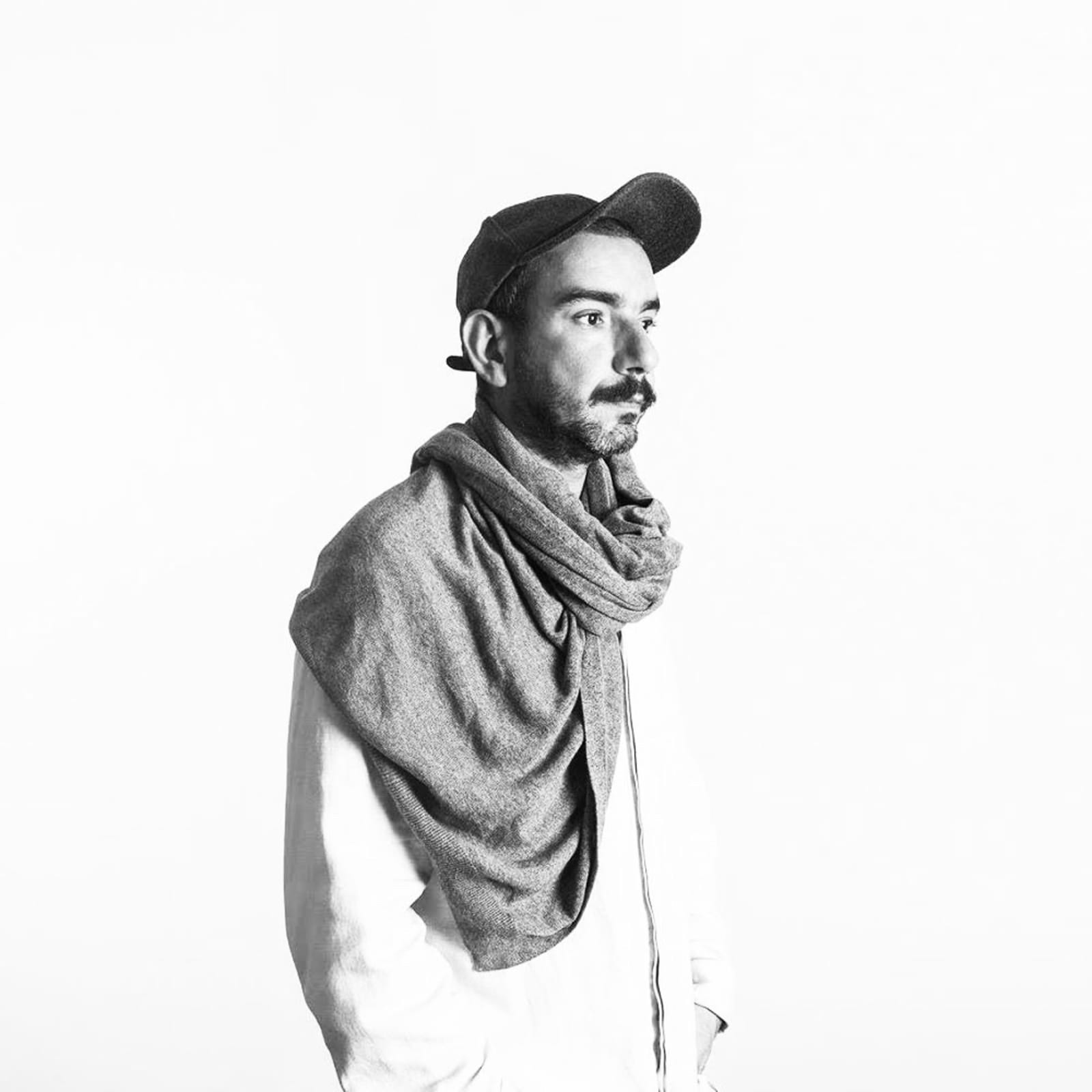
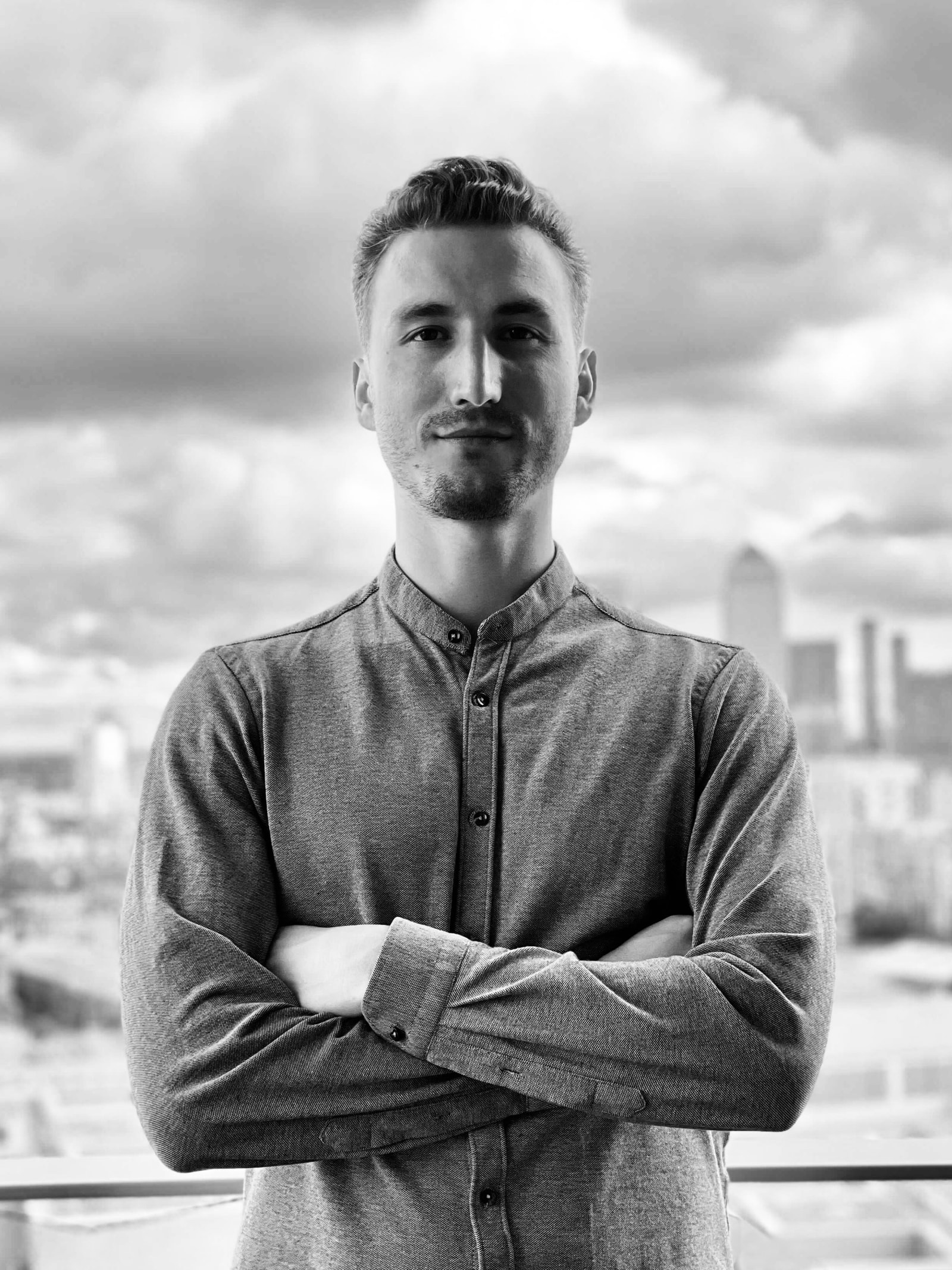
Passionate about photography since the age of thirteen, Mark Mawson studied the craft in Sheffield before embarking on a career that now spans more than thirty years. He has worked across various genres of photography, starting out as a photojournalist covering news and sports before turning to fashion, a period during which he collaborated for nearly eight years with daily newspapers and then magazines. It was while exploring, as a personal project, the photography of colored liquids that he created the “Aqueous” series : a project that proved so successful it became his specialty. Mawson is now recognized as the pioneer of this iconic and highly sought-after series, a groundbreaking body of work that helped launch an entire trend in fluid photography. His mastery of high-speed photography techniques allows him to freeze moments normally invisible to the naked eye like splashes, pours or swirls, in compositions of great chromatic precision. His sources of inspiration are above all sensory: colors, for the unique aesthetic experience created by their harmonious blending, and textures, for the softness that emerges from the way liquids intertwine and merge into one another. He also cites the influence of great photographers such as Elliott Erwitt, Saul Leiter, Robert Doisneau, and Henri Cartier-Bresson.

Based in London, Mark Mawson brings his expertise to major brands and leading advertising agencies, creating both still photographs and advertising films. He has worked for The Sphere in Las Vegas, Coca-Cola, Nespresso, Gap, Asahi, Fujitsu, and many others. His video work “Aqueous,” produced in 2012, received exceptional institutional recognition when it was projected onto the walls of Buckingham Palace as the backdrop for Queen Elizabeth II’s Diamond Jubilee concert. The still series of the same name is now part of numerous private collections. His work has been honored with several international awards, including the Communication Arts Photography Award in 2023, a gold medal at the OneEyeland Photography Awards in 2022, as well as selections at the International Color Awards and the Association of Photographers Awards.


Mark_Mawson_Photography.JPG

White Red Blue Gold 1

White_Red_Blue_Gold_1_Mark_Mawson_Video.mp4

These abstract liquids evoke the colors of France, on the occasion of the Olympic Games in Paris.

technique

video

format

landscape

duration

01:55

year

2024

Transport

WANT TO BRING ART INTO YOUR SPACE?

More from Mark Mawson

More on digital art

Generative art
Generative art refers to a way of creating artworks using an autonomous system. In digital art, these are usually generated from code and algorithms created by the artist, often with certain predefined parameters or systems. Although these parameters guide the final outcome of the work, generative art is generally a surprising way to create artworks, as the results are often unexpected and the number of possible outcomes can be infinite.
AI
AI art is a branch of generative art that uses artificial intelligence. Unlike other generative artworks, AI artworks use specific complex algorithms and models derived from machine learning. The most common methods for creating AI art today are GANs (generative adversarial networks) or proprietary prompting platforms such as ChatGPT, Sora, Midjourney, or Dall-e.
3D
3D art uses 3D software such as Blender, Cinema4D, Houdini, or video game software such as Unity to create works of art. In 3D works, artists can either arrange assets (the 'objects' in a 3D artwork or world) that they have created themselves or purchased from other creators to create elaborate environments and scenes (an approach to 3D art called 'set dressing'), or specialize in sculpting, which involves creating their own objects and assets.
Photogrammetry
Photogrammetry is a specialized 3D technique that allows 3D objects to be created from numerous photographs taken of an object or scene from multiple angles. These photos are then compiled to determine the specific positioning, shape, and dimensions of the object in space, and then converted into a 3D model. Initially developed for engineering and urban planning, photogrammetry has become a way for artists to produce extremely accurate 3D models from real-life images.
Collage
An extension of the traditional, plastic approach to collage, digital collage involves searching for and cutting out multiple images, extracting them from their original context, and recomposing them in a new arrangement to create a work of art. Artists can use their own photographs or find images on the internet.
Illustration
Digital illustrations are created using software such as Adobe Illustrator, Photoshop, or Procreate. As with drawing on paper, the artist uses a stylus to sketch a figure or object, usually on a tablet, to construct a scene or artistic universe. Unlike traditional drawing methods, digital illustration is much more forgiving, as mistakes can be easily corrected and drawn elements and objects can be easily moved around within a scene.
Video
Video artworks primarily use a recording camera, but may sometimes include additional post-processing or editing to distort, modify or add additional elements to the image. Some artists use state-of-the-art recording equipment to create macro zoom-ins or time lapses, privileging fidelity to the subject matter. Others use additional softwares to significantly modify or warp the video, creating an alternative perspective on the world that surrounds us.

Collections with the artist

  • Axioma_Robnous_Generative_art.mp4
    Fluid Dynamics
    41 artworks
  • Element_Perry_Cooper_3D.mp4
  • Skyline_42_Enzo_Roff_Video.mov
  • Flamingos_Rudi_Sebastian_Photography.jpeg
  • Hug_Chloé_Savard_Video.mov
  • Glitter_limes_Laura_Alonso_AI.mp4
  • Stretching_Canvas_Eric_Anton_3D.mp4
  • Flower_Double_Red_Alex_McLeod_3D.mp4
  • Human_Flux_Jérôme_Delapierre_Video.mp4
  • Inner_Forms_vkrm_Generative_art.mp4
  • Deepest_Emeralds_Jeremy_Seeman_3D.mp4
  • Where did you scan from

    RATE YOUR EXPERIENCE