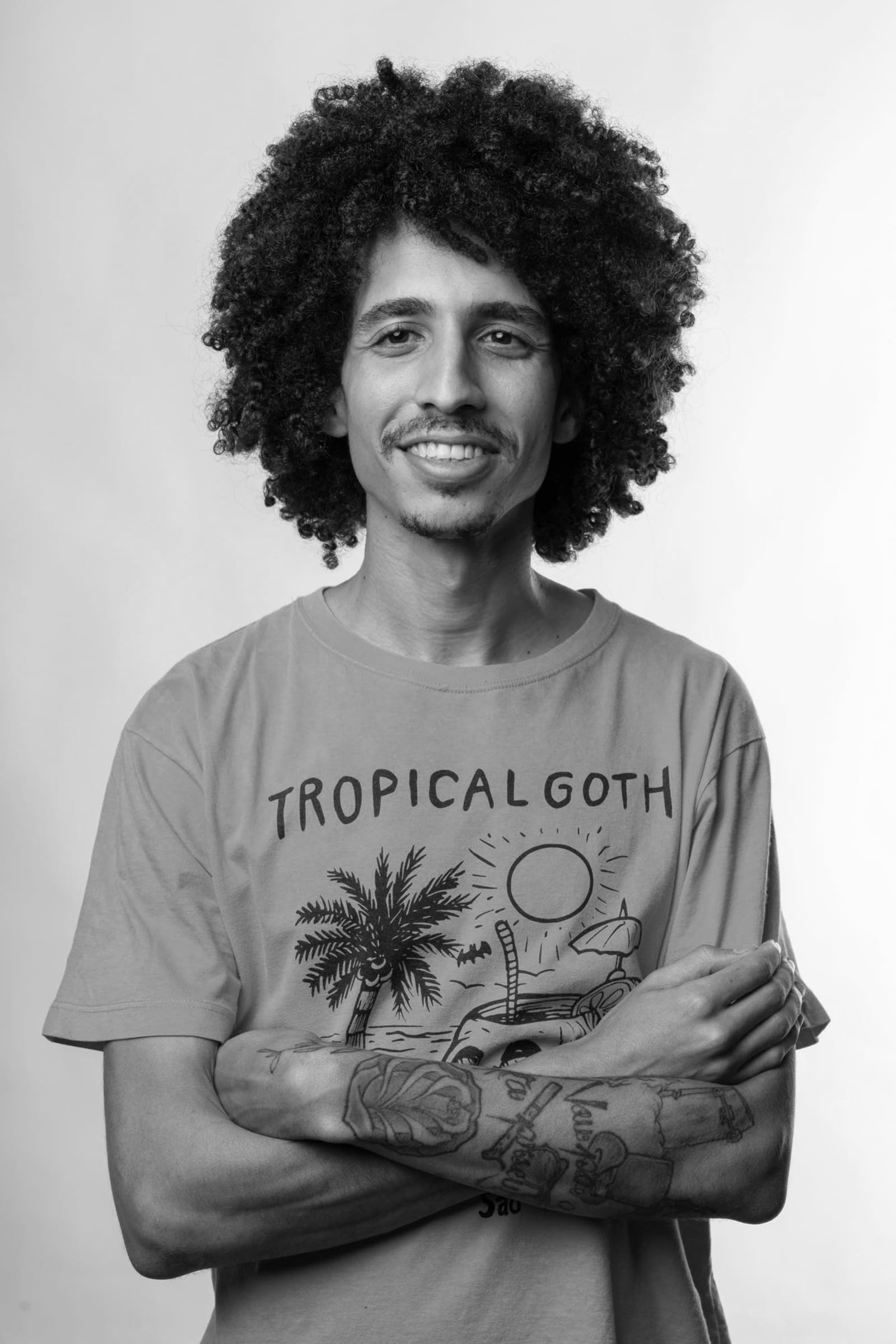
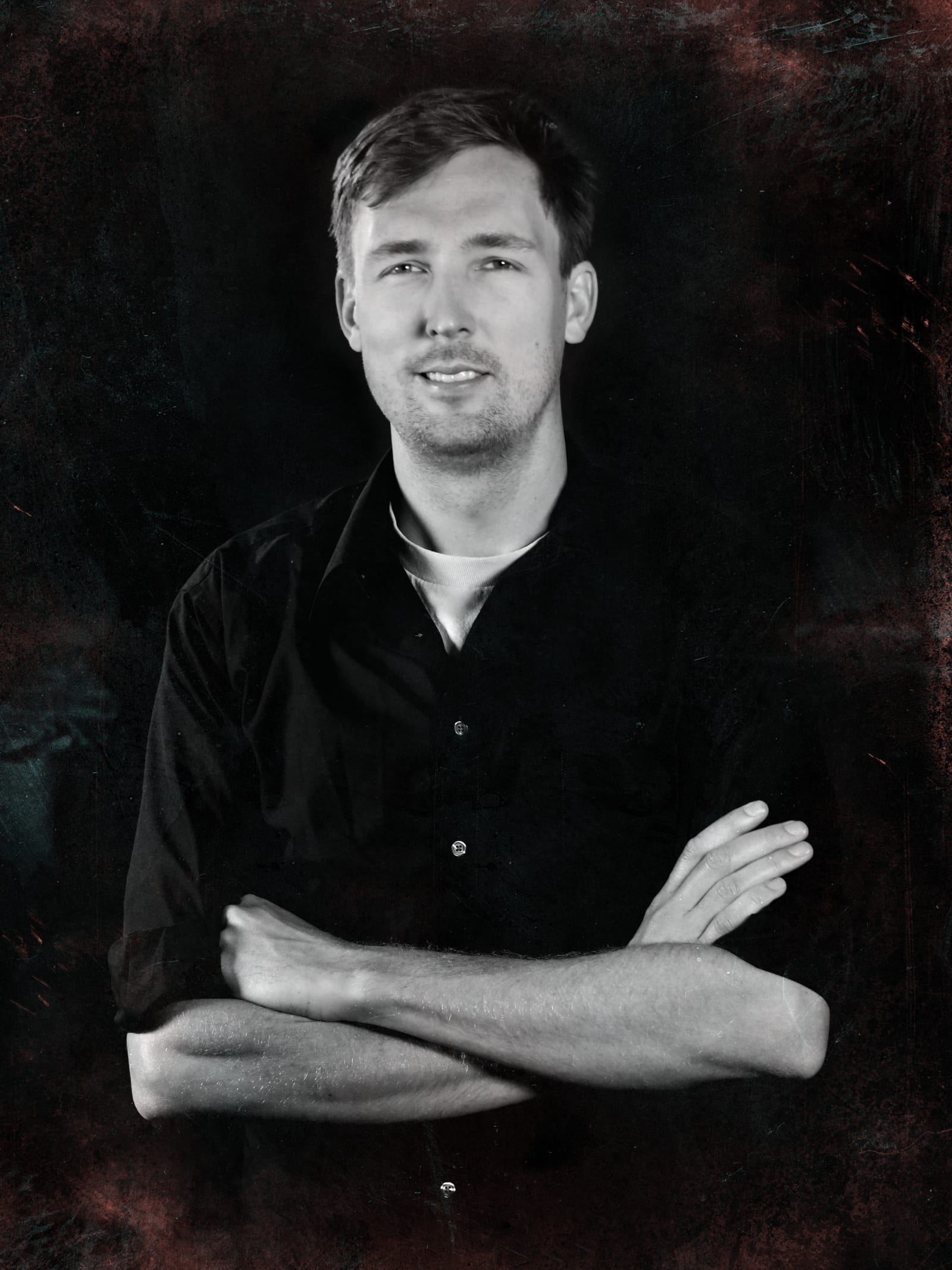
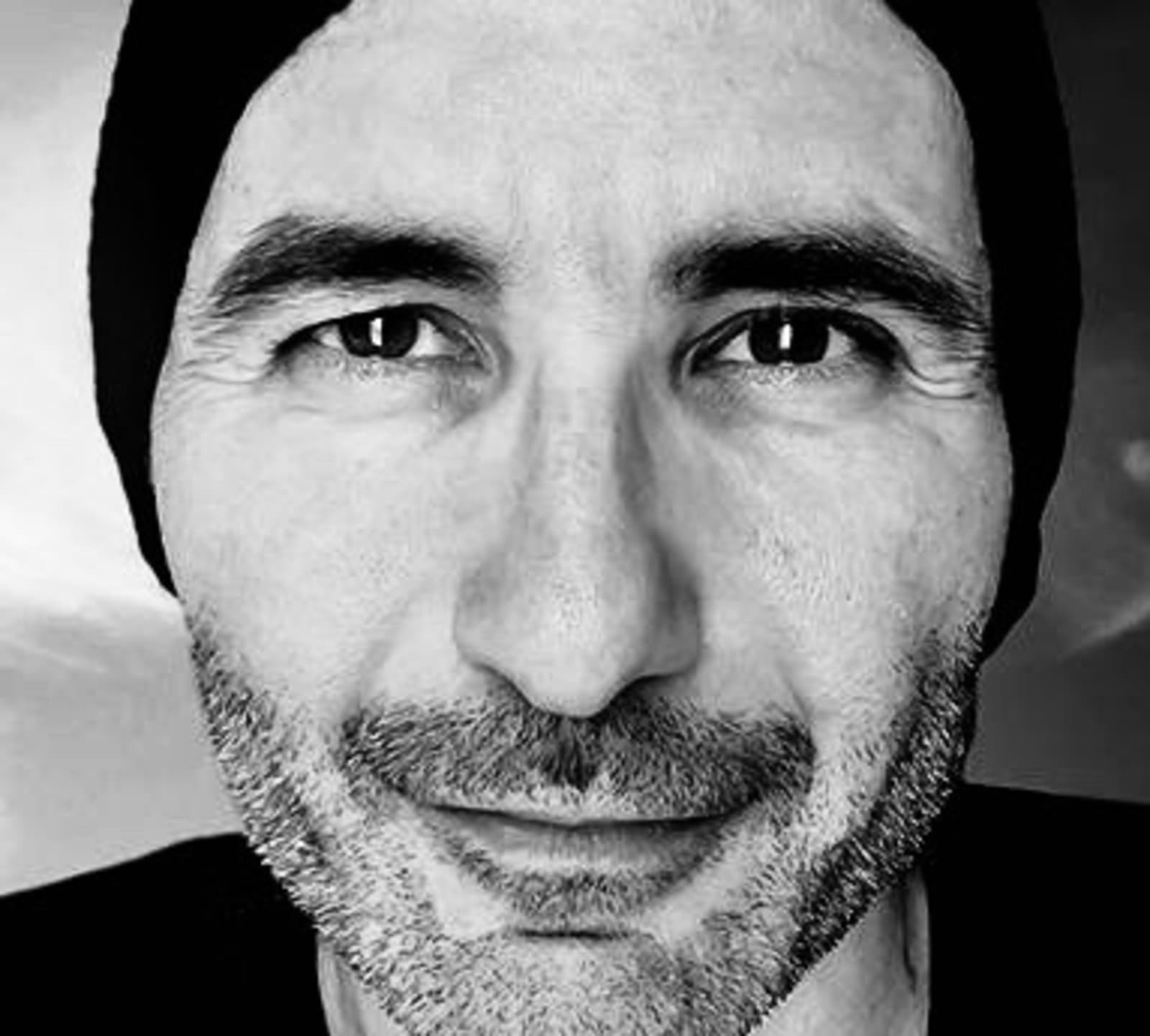
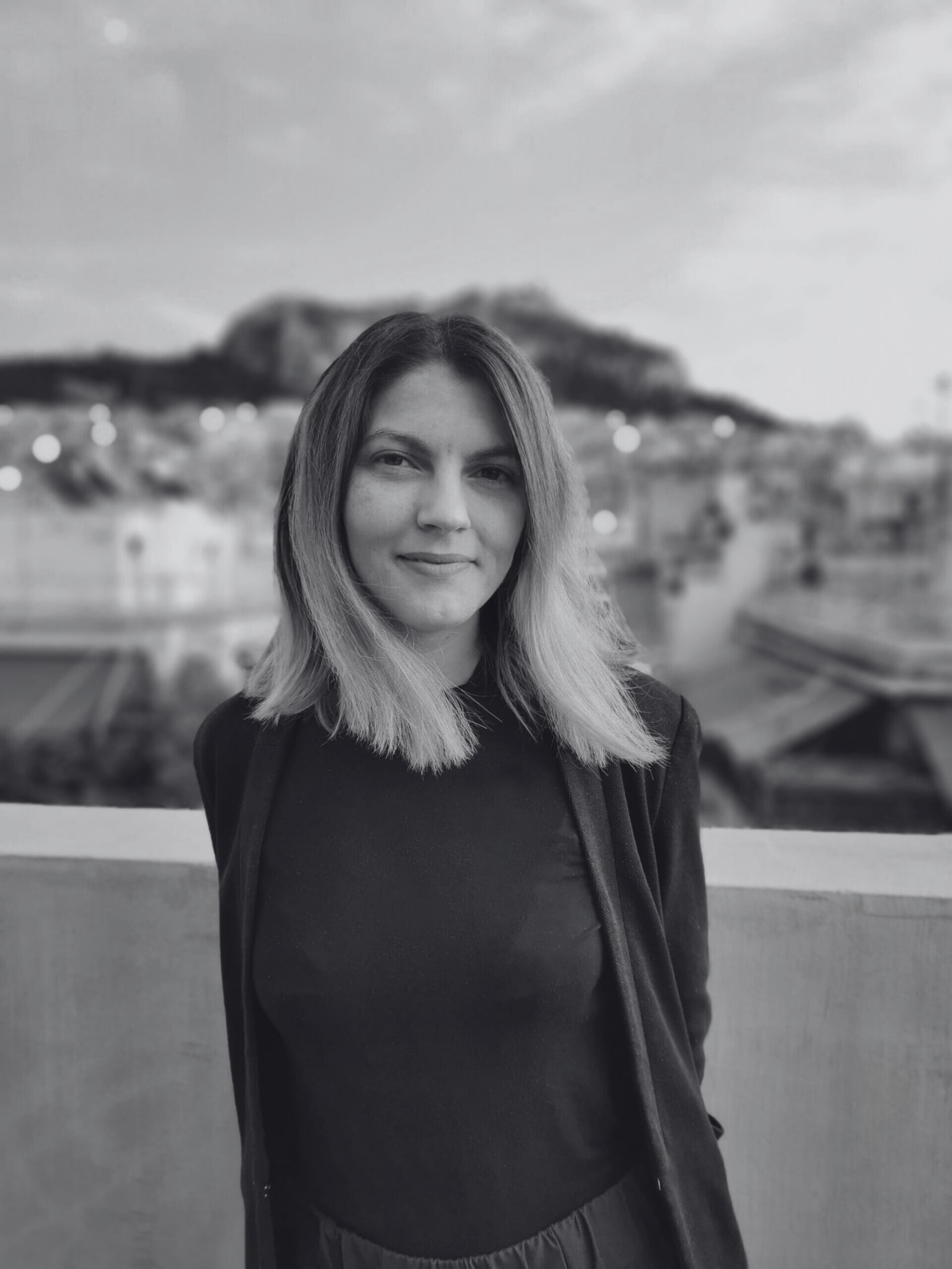
Born in Mexico and now based in Madrid, Paloma Rincón is a visual artist who works with still and moving images in a quirky style characterized by vibrant colors and graphic compositions. After earning a degree in audiovisual communication, she honed her craft by working as an assistant to commercial photographers, while simultaneously developing her own personal projects: a dual experience that gave her a comprehensive understanding of the profession, its technical demands as well as its creative possibilities, and gradually helped her develop her own unique artistic language. Her love of saturated colors owes much to her childhood in Mexico and the unique light she experienced there. Today, Paloma creates visual plays in a playful style where the meaning of objects is redefined through unexpected juxtapositions, at the intersection of photography, sculpture, design, and illustration. Her physical works seem to emerge from the digital realm: synesthetic representations where texture, light, and color blur the line between the real and the unreal. She observes her everyday environment with the same attention she devotes to nature and cultivates a resolutely slow relationship with time, one built on meticulous observation and deliberate restraint, where each image becomes a kind of entry in a visual journal. She works on both personal experimental pieces and commercial projects for international brands and publications.

Represented worldwide, Paloma Rincón collaborates with major international brands such as Coca-Cola, Google, Toyota, Ford, Bombay Sapphire, Sonos, Swatch, Absolut, Samsung, Vodafone, and IKEA; as well as with publications such as Wired Magazine, Architectural Digest, and Esquire. Her personal work has been exhibited and published in Europe, Asia, and the Americas, and has been featured in numerous renowned magazines and books. A jury member for several industry events, she also regularly speaks at conferences and masterclasses around the world, where she shares her approach and vision of contemporary still life.


Paloma_Rincón_Video.jpg

Broken Heart - vertical

Broken_Heart_-_vertical_Paloma_Rincón_Video.mp4

A series about fragility and a truncated love story using flowers in a symbolic way. This is an animation based on a photographic still shot combining High Speed Photography with frozen flowers in liquid nitrogen. Liquid Nitrogen evaporates at -200 ºC and when immersing the flowers on it they become fragile as glass. We used laser sensors to coordinate the exact moment when the flowers hit the surface and exploded to have perfect synchronization with the camera.

technique

video

format

portrait

duration

01:09

year

2018

Transport

WANT TO BRING ART INTO YOUR SPACE?

More from Paloma Rincón

More on digital art

Generative art
Generative art refers to a way of creating artworks using an autonomous system. In digital art, these are usually generated from code and algorithms created by the artist, often with certain predefined parameters or systems. Although these parameters guide the final outcome of the work, generative art is generally a surprising way to create artworks, as the results are often unexpected and the number of possible outcomes can be infinite.
AI
AI art is a branch of generative art that uses artificial intelligence. Unlike other generative artworks, AI artworks use specific complex algorithms and models derived from machine learning. The most common methods for creating AI art today are GANs (generative adversarial networks) or proprietary prompting platforms such as ChatGPT, Sora, Midjourney, or Dall-e.
3D
3D art uses 3D software such as Blender, Cinema4D, Houdini, or video game software such as Unity to create works of art. In 3D works, artists can either arrange assets (the 'objects' in a 3D artwork or world) that they have created themselves or purchased from other creators to create elaborate environments and scenes (an approach to 3D art called 'set dressing'), or specialize in sculpting, which involves creating their own objects and assets.
Photogrammetry
Photogrammetry is a specialized 3D technique that allows 3D objects to be created from numerous photographs taken of an object or scene from multiple angles. These photos are then compiled to determine the specific positioning, shape, and dimensions of the object in space, and then converted into a 3D model. Initially developed for engineering and urban planning, photogrammetry has become a way for artists to produce extremely accurate 3D models from real-life images.
Collage
An extension of the traditional, plastic approach to collage, digital collage involves searching for and cutting out multiple images, extracting them from their original context, and recomposing them in a new arrangement to create a work of art. Artists can use their own photographs or find images on the internet.
Illustration
Digital illustrations are created using software such as Adobe Illustrator, Photoshop, or Procreate. As with drawing on paper, the artist uses a stylus to sketch a figure or object, usually on a tablet, to construct a scene or artistic universe. Unlike traditional drawing methods, digital illustration is much more forgiving, as mistakes can be easily corrected and drawn elements and objects can be easily moved around within a scene.
Video
Video artworks primarily use a recording camera, but may sometimes include additional post-processing or editing to distort, modify or add additional elements to the image. Some artists use state-of-the-art recording equipment to create macro zoom-ins or time lapses, privileging fidelity to the subject matter. Others use additional softwares to significantly modify or warp the video, creating an alternative perspective on the world that surrounds us.

Collections with the artist

  • Rainy_Leaves_Alex_Glocknitzer_AI.mp4
    Echoes of Fall
    63 artworks
  • Junkscope_Paloma_Rincón_Video.mp4
  • We_Are_All_Data_Moteh_3D.mp4
  • Deus_Ex_Machina_Nico_Vuignier_Video.mp4
  • Great_Piece_of_Australia_II__Luke_Conroy_3D.mp4
  • Magic_Meadow_Polina_Bulgakova_3D.mp4
  • Synchronicity_Alan_Bolton_3D.mp4
  • Where did you scan from

    RATE YOUR EXPERIENCE