The Runoff: Xanthopsia 160
The Runoff: Xanthopsia 160
- Collage
- Pop
- Abstract
portrait
collage
01:00
2025

Hypertexte Sémantique: Xanthopsia 192
Treeskulltown

Fenêtre de l'âme: Xanthopsia 204
Treeskulltown

Peaceful Reveries: Xanthopsia 170
Treeskulltown

The Meaning: Xanthopsia 165
Treeskulltown

Le Tramage : Xanthopsia 161
Treeskulltown

The City With Organic Mapping: Xanthopsia 212
Treeskulltown

Subtitles: Xanthopsia 148
Treeskulltown

LIRE
Treeskulltown
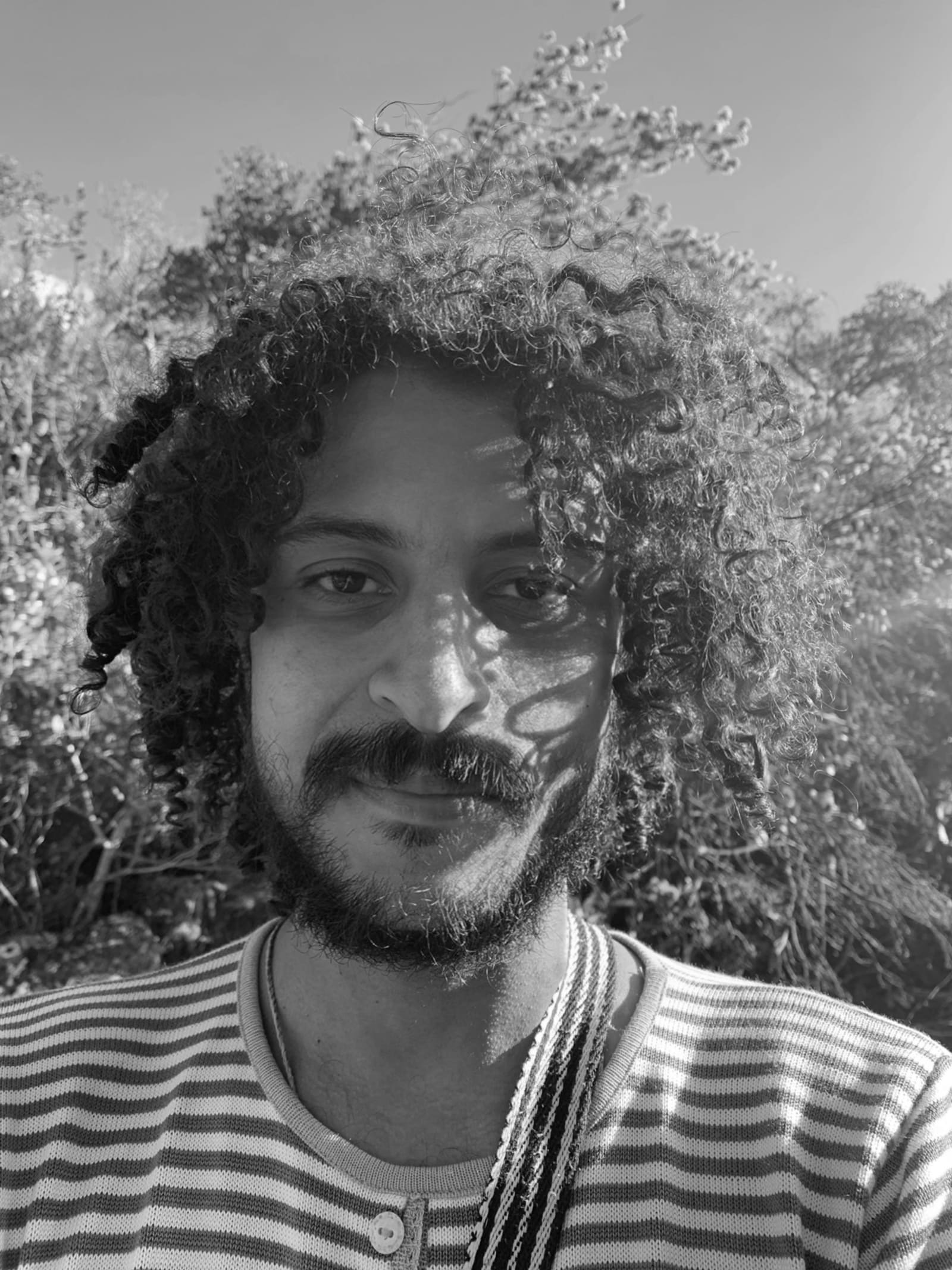
Treeskulltown is the conceptual avatar of a French multidisciplinary artist. For the last 4 years, he has been working in the field of digital art. Having grown up in the 80s, the emergence and development of computer technologies and techniques resonated with him and fuelled his curiosity. With 20 years of experimentation and hybridisation between physical and digital art under his belt, his work today is as much a personal quest as an artistic one. When he became a father, a need for simplicity and freedom, combined with the constraints of mobility, led him to return to the source of the desire to create and the pleasure of doing so, using organic materials (earth, paper, paint, cardboard, wood, etc.). It's a way of rediscovering meaning by naturally reconnecting with feelings and emotions. His aim is to develop a temporal parallel, a conversation, with the masters of classical art, to create a sub-reality to art history using mixed media animation techniques, thus creating an analogue palimpsest in digital strata.
Very involved in the crypto-artist community, his works are collected in Ethereum on FOUNDATION, in Tezos on OBJKT and in Bitcoin on GAMMA. Since 2022, his work has been exhibited and presented internationally at major events such as Art Crush Gallery, MOWNA, NFT NYC, NFT Japan, DAM Zine, NFC Lisbon, NFT Factory Paris, R HAUS Art Basel Miami, QUANTA Gallery London, IHAM NFT Gallery Paris. He was also selected in 2024 in The Hug 100 artists to watch and in the N3W Society Bookzine with the web3 agency: BRAWHAUS. His continual quest to reinvent himself and experiment provokes an emotional interaction with the viewer while guiding them with a subtle and conceptualised narrative.

The Runoff: Xanthopsia 160
1. Artistic and Philosophical Context
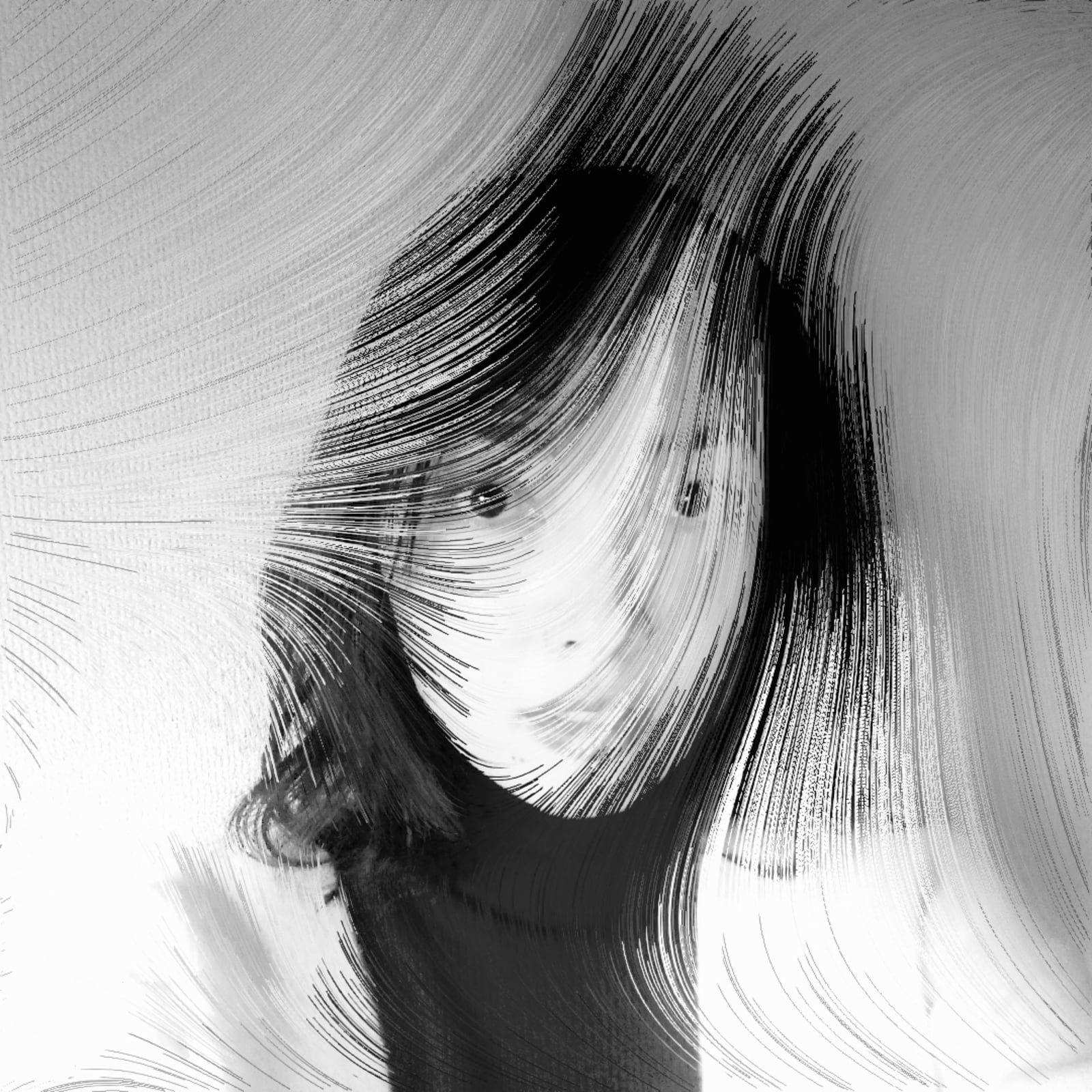
The work "The Runoff" is part of a contemporary abstraction approach, blending Abstract Expressionism and socio-economic reflection. By revisiting Van Gogh's Portrait of a Woman, this piece goes beyond a simple homage to question the mechanisms of symbolic and material redistribution, through the prism of trickle-down theory.
2. Subrealism and Technical Hybridization
Subrealism, here, fuses Van Gogh's dreamlike quality (expressive brushstrokes, vibrant colors) with minimal digital abstraction. The mixed media (acrylic on canvas + digital animation) creates a duality: the physical material recalls human fragility, while the digital evokes the coldness of economic systems. The intermediary photograph serves as a bridge between these two worlds, symbolizing the capture of a moment of transition.
3. Xanthopsia as a Utopian Metaphor
The predominance of yellow, the signature of the Xanthopsia collection, refers to Van Gogh's altered vision while criticizing the utopia of trickle-down. Yellow becomes both hope and illusion, reflecting the duality between light and darkness, abundance and precariousness. This distorted perception invites us to question the reality of economic promises.
4. Resonance with Digital Subculture
The work is rooted in a hybrid aesthetic (visual memes, glitch art, digital minimalism), typical of internet subcultures. The stop-motion animation evokes GIF culture, symbolizing the eternal repetition of economic cycles. Blockchain is implicitly criticized: like trickle-down, it promises egalitarian decentralization but often reproduces existing hierarchies.
5. Homage and Subversion of Van Gogh
By diverting the portrait towards abstraction, the work highlights the tensions dear to Van Gogh: order versus chaos, individual versus collective. The woman in the original portrait becomes an allegory of the disenfranchised, whose face dissolves into colorful flows—a reminder that the flow erases singularities in favor of impersonal systems.
7. Conclusion: Art as a Critical Laboratory
"The Flow" goes beyond aesthetic reinterpretation to offer a meditation on contemporary economic narratives. By hybridizing traditional and digital techniques, the work itself embodies a symbolic flow: that of classical art toward the digital, questioning how past works can shed light on current debates. The Xanthopsia collection, as a whole, invites us to see beyond appearances—whether in art, the economy, or our relationship with the world.
Summary: This piece is a manifesto of engaged art, where subrealism and digital technology serve to deconstruct economic mythologies while paying homage to the transformative power of Van Gogh. It proves that contemporary art, when it fuses heritage and innovation, can offer keys to deciphering the complex realities of our time.
The Runoff: Xanthopsia 160:
Original at : Van Gogh Museum
#treeskulltown digital art version :
2160 x 3840 px / GIF (4K version 140 Mo available) / 40,7 Mo / 12 fps / 100 éditions
collage
portrait
01:00
2025
More from Treeskulltown
More on digital art
Collections with the artist