Curvatures: Xanthopsia 174
Curvatures: Xanthopsia 174
- Collage
- Pop
- Abstract
portrait
collage
01:00
2025

Hypertexte Sémantique: Xanthopsia 192
Treeskulltown

Fenêtre de l'âme: Xanthopsia 204
Treeskulltown

Peaceful Reveries: Xanthopsia 170
Treeskulltown

The Meaning: Xanthopsia 165
Treeskulltown

Le Tramage : Xanthopsia 161
Treeskulltown

The City With Organic Mapping: Xanthopsia 212
Treeskulltown

Subtitles: Xanthopsia 148
Treeskulltown

LIRE
Treeskulltown
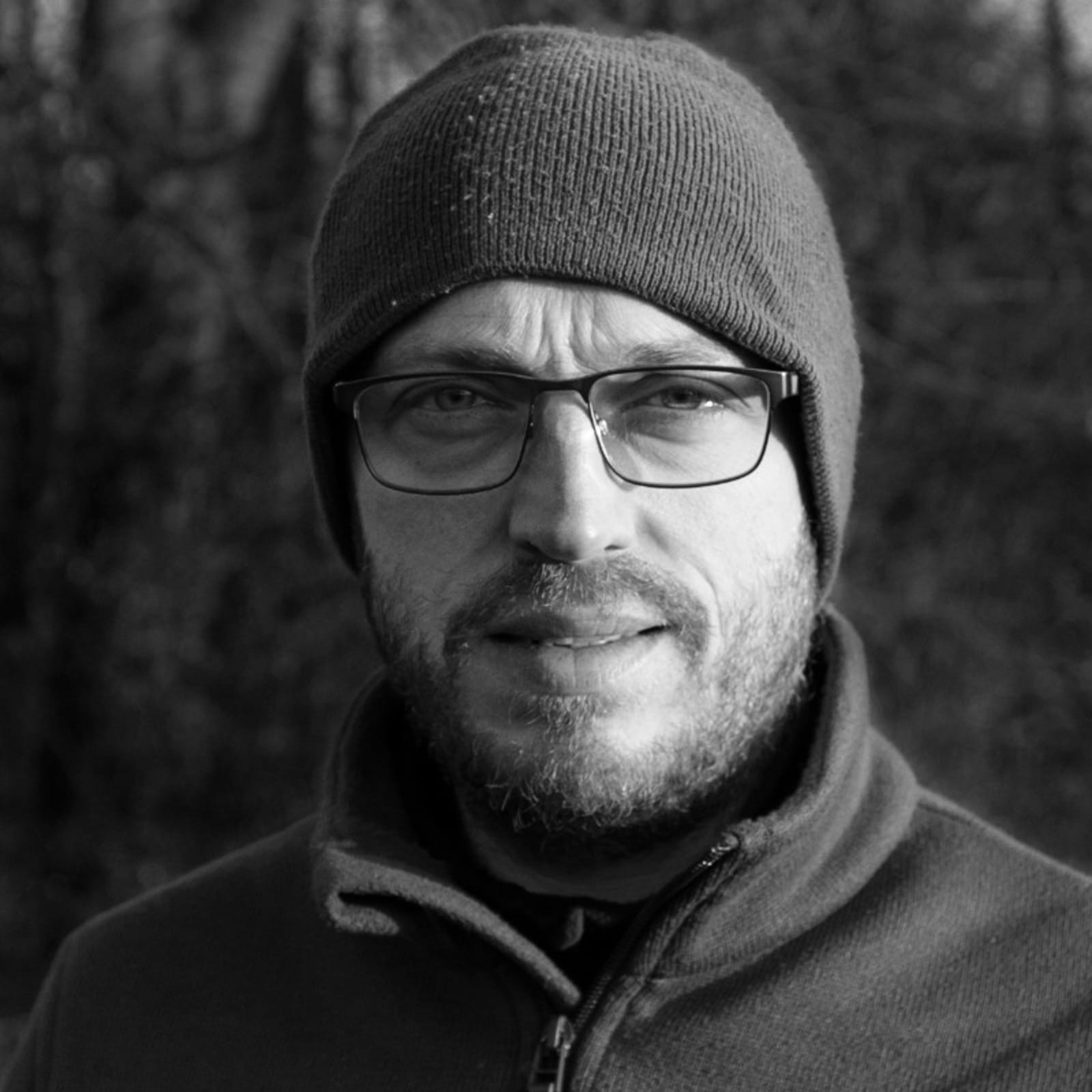
Treeskulltown is the conceptual avatar of a French multidisciplinary artist. For the last 4 years, he has been working in the field of digital art. Having grown up in the 80s, the emergence and development of computer technologies and techniques resonated with him and fuelled his curiosity. With 20 years of experimentation and hybridisation between physical and digital art under his belt, his work today is as much a personal quest as an artistic one. When he became a father, a need for simplicity and freedom, combined with the constraints of mobility, led him to return to the source of the desire to create and the pleasure of doing so, using organic materials (earth, paper, paint, cardboard, wood, etc.). It's a way of rediscovering meaning by naturally reconnecting with feelings and emotions. His aim is to develop a temporal parallel, a conversation, with the masters of classical art, to create a sub-reality to art history using mixed media animation techniques, thus creating an analogue palimpsest in digital strata.
Very involved in the crypto-artist community, his works are collected in Ethereum on FOUNDATION, in Tezos on OBJKT and in Bitcoin on GAMMA. Since 2022, his work has been exhibited and presented internationally at major events such as Art Crush Gallery, MOWNA, NFT NYC, NFT Japan, DAM Zine, NFC Lisbon, NFT Factory Paris, R HAUS Art Basel Miami, QUANTA Gallery London, IHAM NFT Gallery Paris. He was also selected in 2024 in The Hug 100 artists to watch and in the N3W Society Bookzine with the web3 agency: BRAWHAUS. His continual quest to reinvent himself and experiment provokes an emotional interaction with the viewer while guiding them with a subtle and conceptualised narrative.

Curvatures: Xanthopsia 174
1. Philosophical and Artistic Context
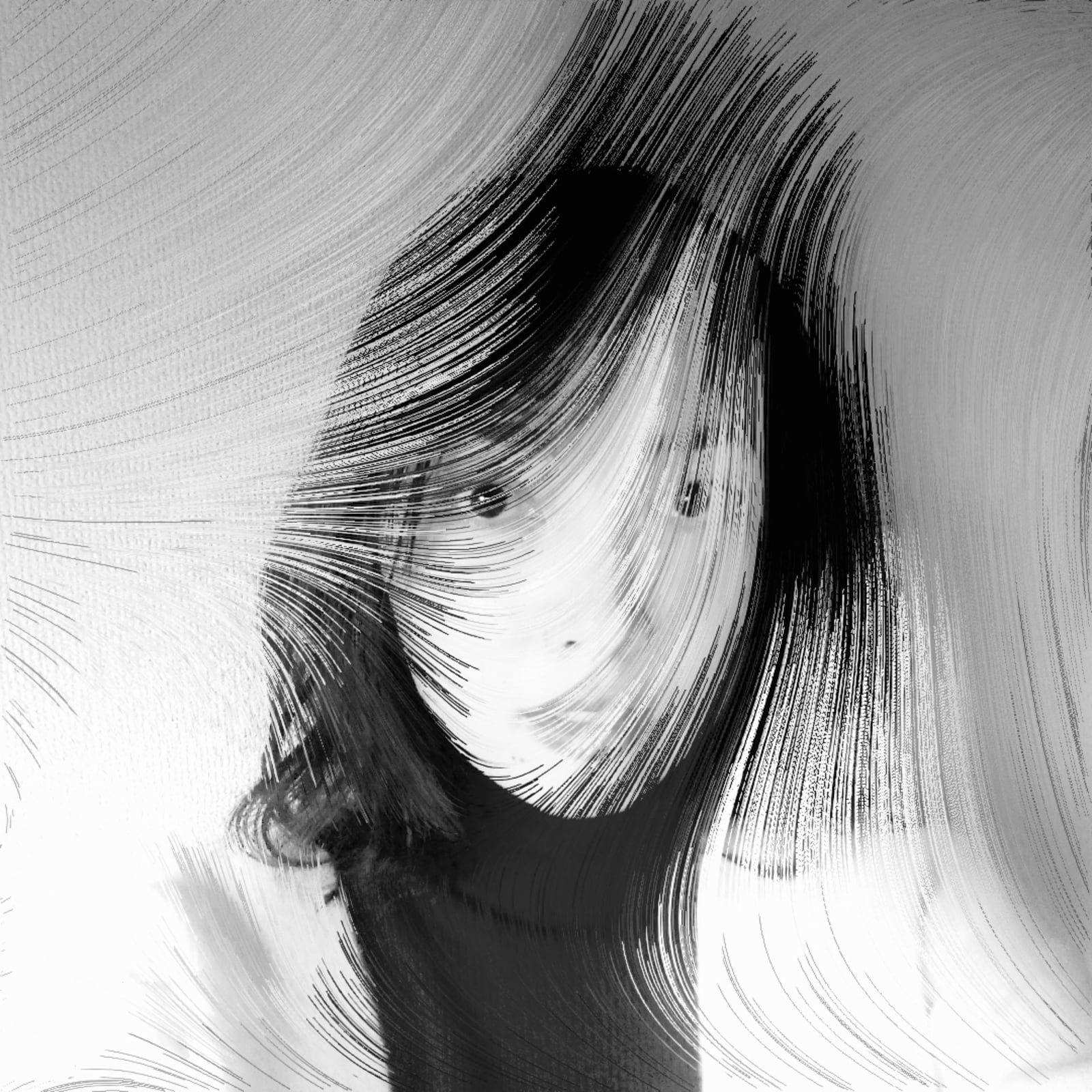
The work "Curvatures" is part of a profound reflection on contemporary abstraction, in which the reinterpretation of Van Gogh's "Portrait of a Lady" becomes a pretext for exploring the tensions between figuration and abstraction, between tradition and modernity. Philosophically, this piece questions the notions of duality and coexistence—themes dear to Van Gogh—transposing them into a contemporary vision where the feminine embodies resilience, generosity, and strength. The title "Curvatures" evokes organic forms, sinuous movements, and meaningful voluptuousness, symbolizing both the flexibility of the mind and the ability to transcend constraints.
2. Subrealism and Gestural Abstraction
Subrealism, as practiced here, does not seek to reproduce reality, but to extract its emotional and symbolic essence. By revisiting Van Gogh's portrait, the emphasis is placed on curves—dynamic lines, spirals, and volutes—which become metaphors for emotions and vital energy. Gestural Abstract Expressionism, inherited from artists such as de Kooning and Pollock, is summoned to liberate gestures and translate the intensity of the feminine in its rawest essence. The brushstrokes, both physical and digital, create a dialogue between the materiality of acrylic paint and the immateriality of digital technology.
3. Tribute to Femininity and Resilience
"Curves" celebrates women in all their complexity: their beauty, generosity, strength, and exceptional resilience. By erasing the figurative features of the original portrait, the work suggests that the grandeur of the feminine lies in its very invisibility—in that which eludes conventional representation. The curves, both soft and powerful, become allegories of this duality: fragility and endurance, gentleness and determination.
4. Technical Hybridization: Physical and Digital Painting
The mixed media employed—acrylic on canvas photographed, digitally reworked, then animated frame by frame—embodies a hybrid vision, at the intersection of digital subcultures and traditional artistic practices. The photograph of the canvas preserves the texture and authenticity of the pictorial gesture, while the minimalist animation adds a temporal and meditative dimension. This approach allows the curves to "breathe life," making them vibrate and transform, evoking the continuous flow of emotions and experiences.
5. Digital Meditation and the Reinvention of Classical Art
The minimalist animation, based on a succession of subtly altered images, invites meditative contemplation. Each movement—an unfolding curve, a color in motion—encourages an intuitive connection with the work. This dynamic interpretation also questions how digital tools can enrich our relationship with classical masterpieces: not by replacing them, but by extending their resonance in a contemporary language.
Summary
"Curves" is much more than a simple reinterpretation: it is a philosophical and sensory homage to femininity, an exploration of the tensions between tradition and innovation, and a celebration of art's capacity to reinvent itself. By blending physical painting and digital animation, this work embodies a hybrid, subrealist vision, where curves become the universal language of emotion and resilience. As part of the Xanthopsia collection, it reminds us that even in altered perceptions, there is beauty to be discovered—a utopia of positivity, reflecting the eternal strength of the feminine.
Curvatures: Xanthopsia 174:
Tribute to Van Gogh:
« Portrait of a woman wearing a hat »
in Van Gogh Museum collection
Digital art version :
2160 x 3840 px / 4K MP4 / 109 Mo / 7 fps / 1/1 édition on @objktcom
collage
portrait
01:00
2025
More from Treeskulltown
More on digital art
Collections with the artist