The Kubrick
The Kubrick
- 3D
- Nature
- Architecture
- Meditative
landscape
3d
01:23
2022

Aviator
NoCreative

En Route
NoCreative

Synthetic - vertical
NoCreative

Abulia
NoCreative
The Kubrick
NoCreative

Solid State Society
NoCreative

Synthetic
NoCreative

C3
NoCreative
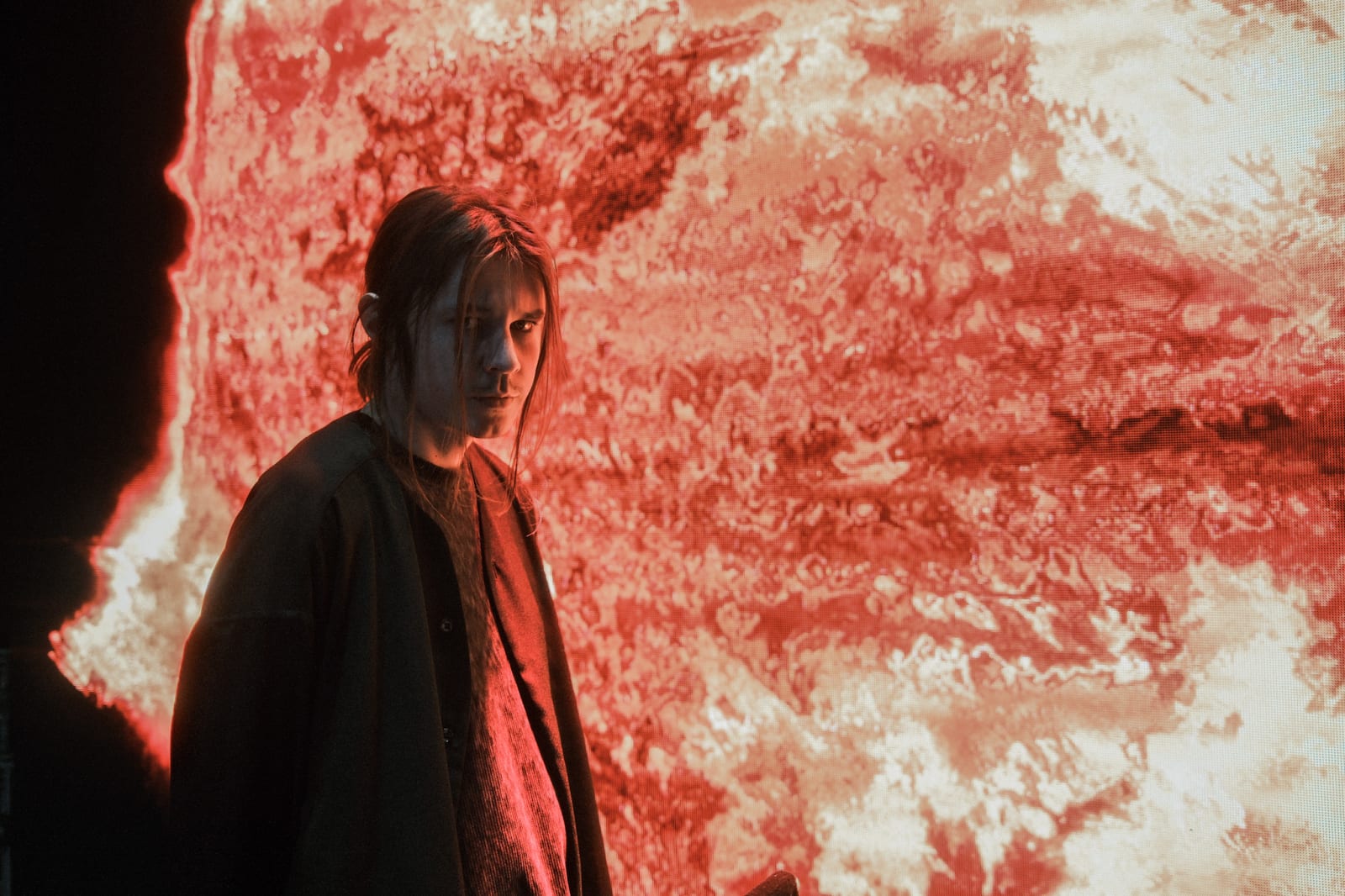
Kristian Levin aka noCreative is a 3D Artist working out of Copenhagen, Denmark. He has 15+ years of experience across multiple disciplines in the creative industry, including the traditional art space and fine arts photography. Known for his striking highly detailed, technical, signature 3D cloth and interior/environment work, he has set himself apart within the NFT art community as a thought leader, artist, collector and curator.
Kristian entered the NFT scene in late 2020, enabling a life long dream of becoming an established artist. He has been exhibited at multiple venues the world over like; Calgary contemporary, TED Vancouver, Beijing contemporary, TEFAF in the Netherlands, the Stratosphere in Beijing and at multiple billboards in Times Square during NFT NYC, to name a few. Kristian is considered a community leader within the NFT Twitter space and has amassed a following of over 33k which is growing at a rate of 8% per month. He's been a curator on two official drops on Makersplace, one for SuperRare in association with NEAL and recently did his first curated drop on Nifty Gateway.

The Kubrick
"The fabric is infinite, it stretches eternally Transcending reality, deforming time. It's full of stars."
Description:
The idea sprang from a discussion about black holes and how to visualize them. And thus the creation of the fabric of space and time commenced. This artwork explores the idea of an infinite loop, in conjunction with the concept of a looping universe. The Loop quantum cosmology; the theory that the universe keeps expanding until it collapses in on itself, and then bounces back, in infinitude. An ever looping big crunch, to big bang. A everlasting feedback loop.The main inspiration is clearly Stanley Kubrick, specially; A Space Odyssey 2001.
The room is modelled with strong hints to the end scenes of the movie, and the white looping cloth is a nod to the bone being tossed into the air, transitioning to the space age of humans(Specifically the revolving space station, main vessel in the movie, generating artificial gravity. Thought up by Arthur C. Clarke, author of the book(s)). The eye on the back wall, is a nod to the godly aspect Kubrick added to ASO2001, in his case the black monolith. In this artwork, a combination of the all seeing eye and the deep blue cloth, transitioning to white and a new beginning. The agnosticism never leaving the equation. All is done with the deepest respect of Kubrick's masterly eye for composing a scene, slow moving cameras, and perfectly executed transitions. To understate desolation and emptiness, the artwork presented without humans. With a strong the focus of beauty of decay and abandonment.The music is a mixture of the same symphony; Also sprach Zarathustra by Richard Strauss.
One version, the drone part of the piece, is the music slowed down 800%. The horns are played at the original speed, but very chopped and skewed. This was all done as another nod to Kubrick, and to give the sense of the familiar in combination with the otherworldly.
Technical breakdown:
Kristian used Cinema 4D to create the scene and fauna. The cloth simulations were done in Houdini. Textures are hand painted in photoshop, visualized in Octane Render, as well as the lighting and camera art direction. All post production is done in DaVinci Resolve.
3d
landscape
01:23
2022
More from NoCreative
More on digital art
Collections with the artist