Le Tramage : Xanthopsia 161
Le Tramage : Xanthopsia 161
- Collage
- Pop
- Abstract
landscape
collage
00:59
2025

Hypertexte Sémantique: Xanthopsia 192
Treeskulltown

Fenêtre de l'âme: Xanthopsia 204
Treeskulltown

Peaceful Reveries: Xanthopsia 170
Treeskulltown

The Meaning: Xanthopsia 165
Treeskulltown
Le Tramage : Xanthopsia 161
Treeskulltown

The City With Organic Mapping: Xanthopsia 212
Treeskulltown

Subtitles: Xanthopsia 148
Treeskulltown

LIRE
Treeskulltown
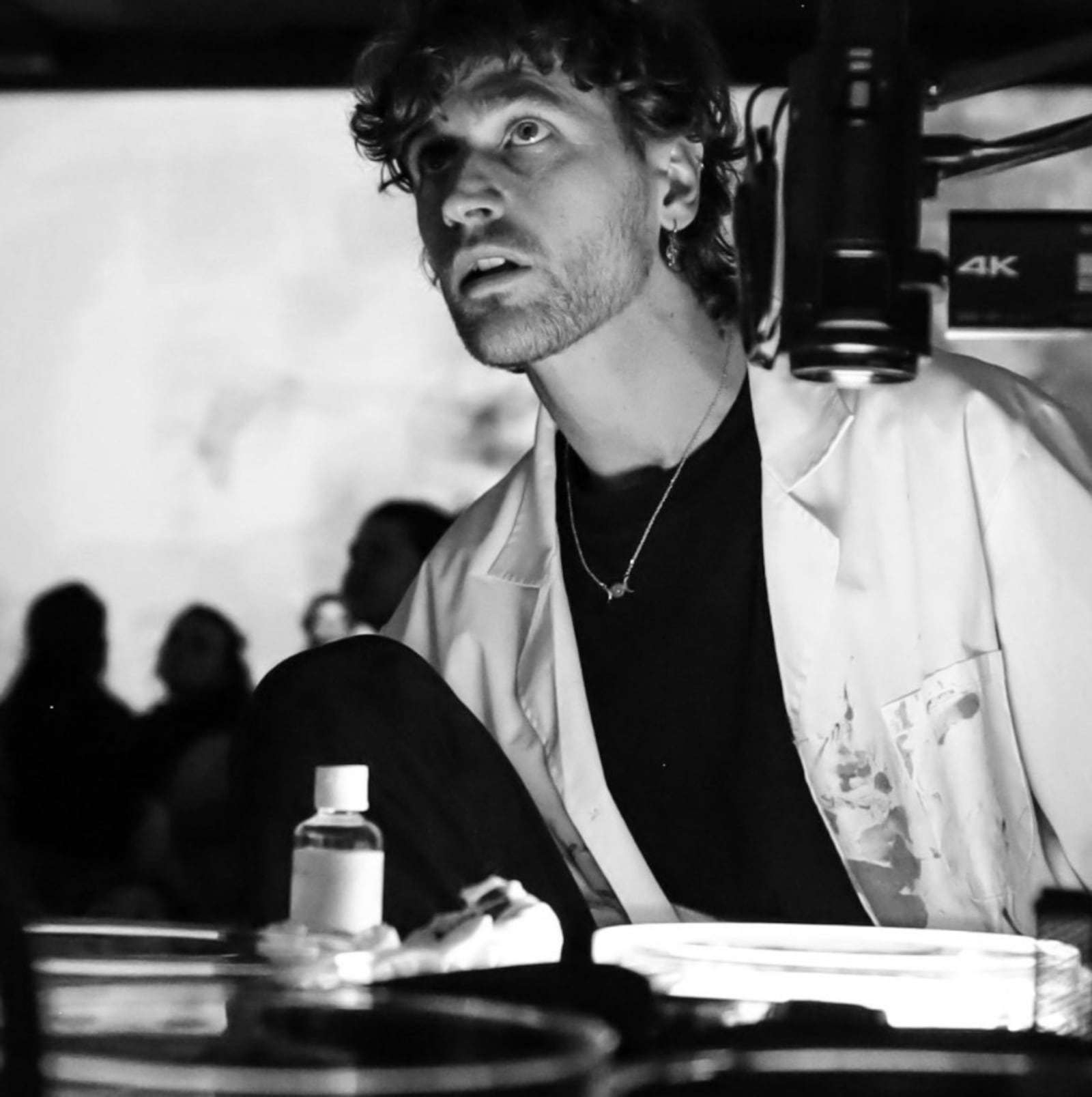
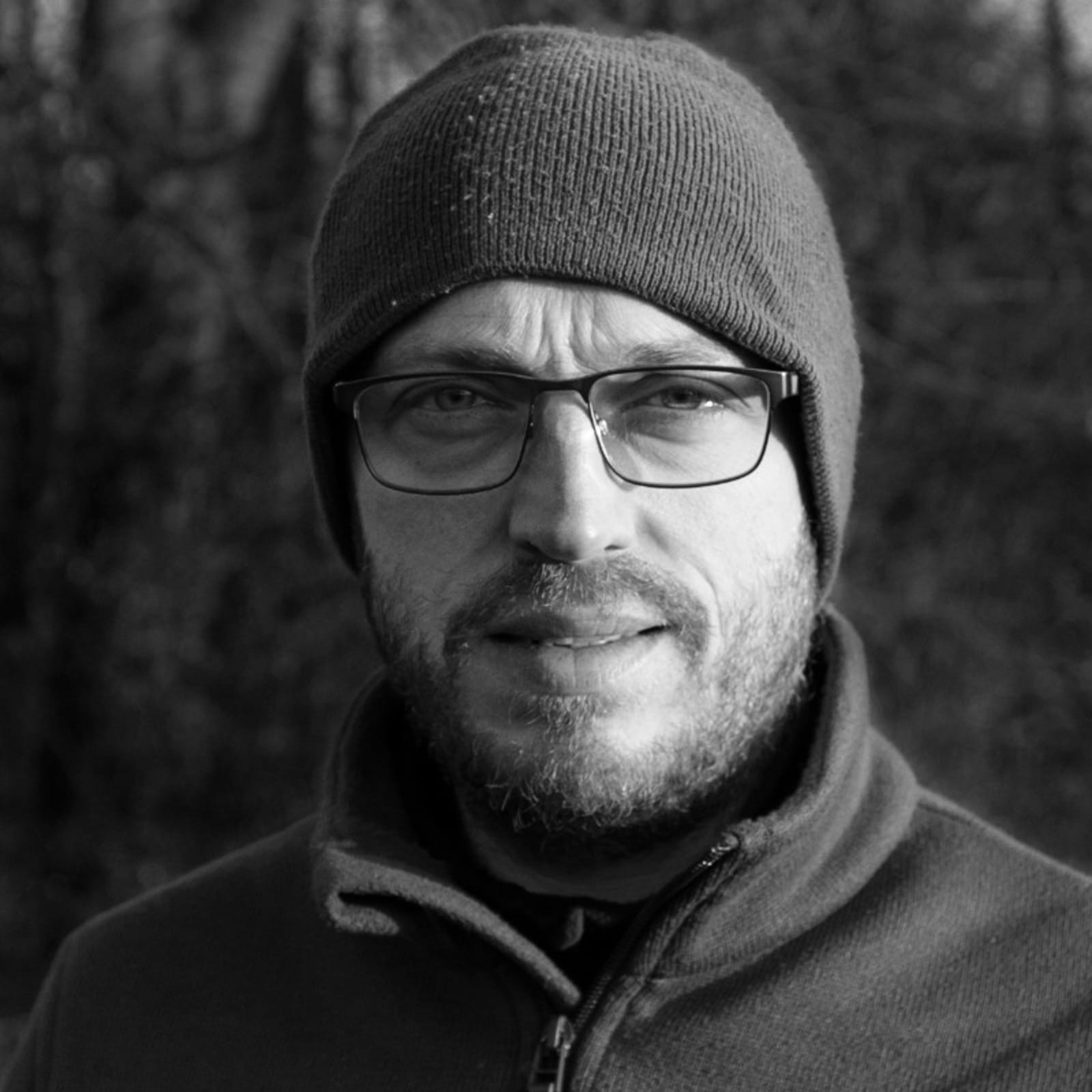
Treeskulltown is the conceptual avatar of a French multidisciplinary artist. For the last 4 years, he has been working in the field of digital art. Having grown up in the 80s, the emergence and development of computer technologies and techniques resonated with him and fuelled his curiosity. With 20 years of experimentation and hybridisation between physical and digital art under his belt, his work today is as much a personal quest as an artistic one. When he became a father, a need for simplicity and freedom, combined with the constraints of mobility, led him to return to the source of the desire to create and the pleasure of doing so, using organic materials (earth, paper, paint, cardboard, wood, etc.). It's a way of rediscovering meaning by naturally reconnecting with feelings and emotions. His aim is to develop a temporal parallel, a conversation, with the masters of classical art, to create a sub-reality to art history using mixed media animation techniques, thus creating an analogue palimpsest in digital strata.
Very involved in the crypto-artist community, his works are collected in Ethereum on FOUNDATION, in Tezos on OBJKT and in Bitcoin on GAMMA. Since 2022, his work has been exhibited and presented internationally at major events such as Art Crush Gallery, MOWNA, NFT NYC, NFT Japan, DAM Zine, NFC Lisbon, NFT Factory Paris, R HAUS Art Basel Miami, QUANTA Gallery London, IHAM NFT Gallery Paris. He was also selected in 2024 in The Hug 100 artists to watch and in the N3W Society Bookzine with the web3 agency: BRAWHAUS. His continual quest to reinvent himself and experiment provokes an emotional interaction with the viewer while guiding them with a subtle and conceptualised narrative.

Le Tramage : Xanthopsia 161
A subrealist and hybrid reinterpretation of Van Gogh's "The Sower II" (1888)
1. Philosophical and Artistic Conceptualization
« Le Tramage » operates a double abstraction: formal (through digital and pictorial fragmentation) and symbolic (through the transposition of the agricultural gesture into a technological gesture). Van Gogh's sower, a reinterpretation of Millet's sower, an archetype of human labor and natural cyclicality, here becomes an allegory of digital flows and contemporary production mechanisms. Screening, a printing technique based on RGB (red, green, blue) additive synthesis, is elevated to a structuring metaphor: it represents the invisible grid that governs our screens, our economies, and our perceptions. This reinterpretation goes beyond simple homage to question the relationship between organicity and artificiality, between the physical and the digital fields. 2. Technical Hybridity and Subrealist Language
The work combines:
- Acrylic paint on canvas: expressionist gestures, impasto, and textures reminiscent of the materiality of Van Gogh's art, but disrupted by digital overlays.
Subrealism emerges from this tension: it is neither about representing reality nor abolishing it, but about revealing the technological substrates that mediate it (screens, algorithms, networks).
3. Allegory of Screening: Modern Subsistence and Digital Hypnosis
The sower no longer sows seeds but pixels—units of light and information. His gesture symbolizes:
- Digital production: as fields fed workers, data feeds the contemporary economy.
- Hypnotic consumption: RGB screening becomes the pulsating rhythm of screens, a cadence as captivating as the furrows of the harvest.
- Van Gogh's duality updated: the tensions between light and darkness, between organicity (the canvas) and artificiality (the pixel), echo the harmonies and conflicts dear to Van Gogh.
4. Integration into the digital subculture and the Xanthopsia collection
Xanthopsia (yellow vision)—an altered perception where the world appears tinged with yellow—is interpreted here as a filtered utopia: the search for positivity in the excess of digital light. Van Gogh's yellow, a sunny and vibrant color, symbolizes both optimism and the sensory saturation of screens.
This piece is part of a hybrid aesthetic specific to digital subcultures (glitch art, pixel art, speculative realism), where the classical and the contemporary coexist without hierarchy.
5. Meditation on artistic reinvention
"Le Tramage" illustrates how modern techniques (digital, animation) do not erase the classical but recontextualize it. The painted gesture and the animated pixel interact to question:
- The persistence of the body in digital art (the painter's hand vs. the user's hand).
- The democratization of tools: just as Van Gogh used pigments that were innovative for his time, contemporary artists use digital technology to expand their visual language.
- Temporal transcendence: Van Gogh's work is reread through the prisms of cyberspace, demonstrating its capacity to generate infinite interpretations.
Conclusion
"Le Tramage" is a manifesto about art as a weaving process: between past and present, between grain of wheat and pixel, between human gesture and algorithm. It offers an active contemplation of our overlapping realities—agrarian and digital—and invites us to perceive, behind the flow of screens, the persistent furrows of humanity.
Le Tramage : Xanthopsia 161:
Tribute to Van Gogh : « Le semeur II »
Original at : Fondation L. Jäggli-Hahnloser
#treeskulltown digital art version :
3840 x 2160 px / 4K MP4 / 135 Mo / 11 fps / 1/1 édition
collage
landscape
00:59
2025
More from Treeskulltown
More on digital art
Collections with the artist