Allusion to Inner Fire: Xanthopsia 169
Allusion to Inner Fire: Xanthopsia 169
- Collage
- Pop
- Abstract
landscape
collage
01:00
2025

Hypertexte Sémantique: Xanthopsia 192
Treeskulltown

Fenêtre de l'âme: Xanthopsia 204
Treeskulltown

Peaceful Reveries: Xanthopsia 170
Treeskulltown

The Meaning: Xanthopsia 165
Treeskulltown

Le Tramage : Xanthopsia 161
Treeskulltown

The City With Organic Mapping: Xanthopsia 212
Treeskulltown

Subtitles: Xanthopsia 148
Treeskulltown

LIRE
Treeskulltown
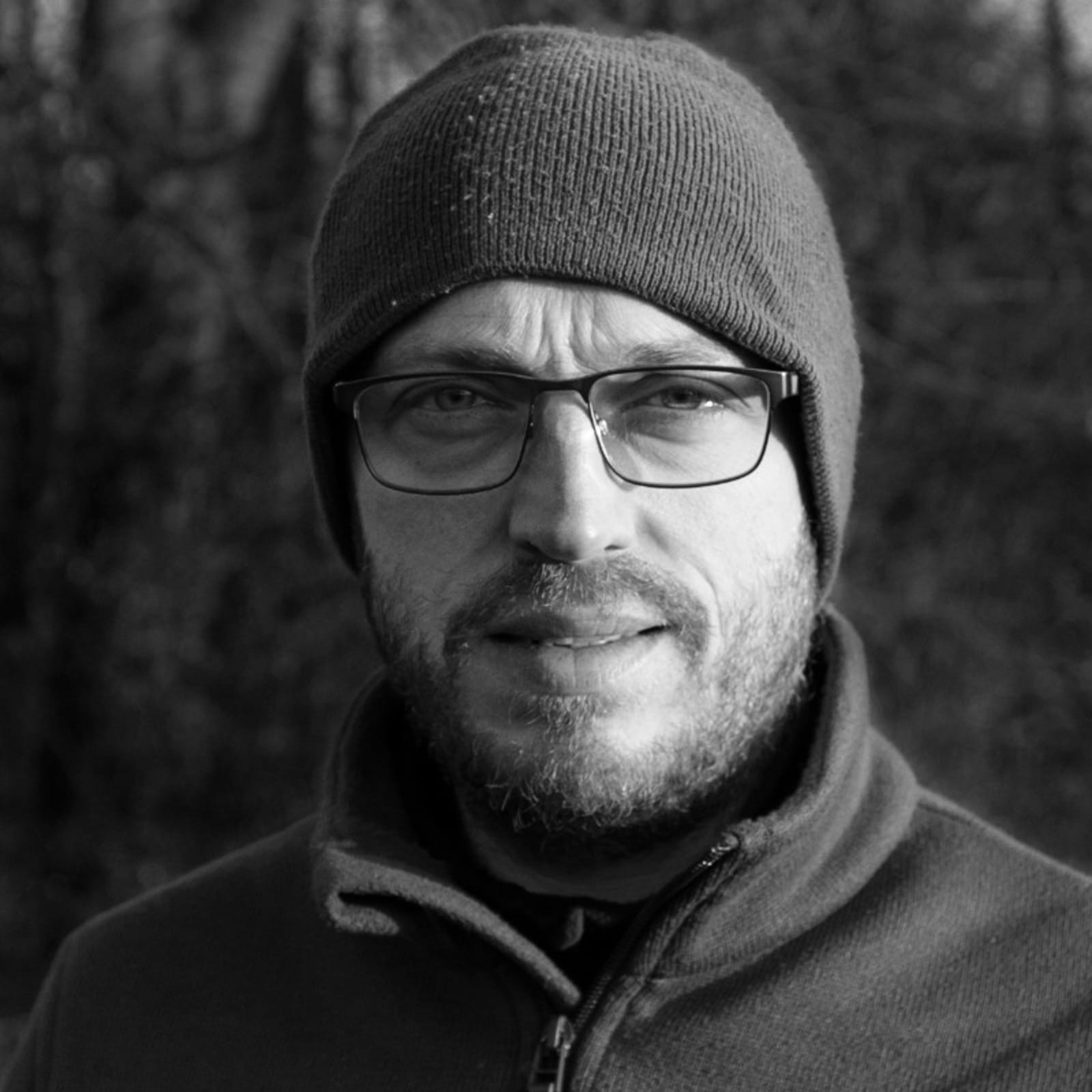
Treeskulltown is the conceptual avatar of a French multidisciplinary artist. For the last 4 years, he has been working in the field of digital art. Having grown up in the 80s, the emergence and development of computer technologies and techniques resonated with him and fuelled his curiosity. With 20 years of experimentation and hybridisation between physical and digital art under his belt, his work today is as much a personal quest as an artistic one. When he became a father, a need for simplicity and freedom, combined with the constraints of mobility, led him to return to the source of the desire to create and the pleasure of doing so, using organic materials (earth, paper, paint, cardboard, wood, etc.). It's a way of rediscovering meaning by naturally reconnecting with feelings and emotions. His aim is to develop a temporal parallel, a conversation, with the masters of classical art, to create a sub-reality to art history using mixed media animation techniques, thus creating an analogue palimpsest in digital strata.
Very involved in the crypto-artist community, his works are collected in Ethereum on FOUNDATION, in Tezos on OBJKT and in Bitcoin on GAMMA. Since 2022, his work has been exhibited and presented internationally at major events such as Art Crush Gallery, MOWNA, NFT NYC, NFT Japan, DAM Zine, NFC Lisbon, NFT Factory Paris, R HAUS Art Basel Miami, QUANTA Gallery London, IHAM NFT Gallery Paris. He was also selected in 2024 in The Hug 100 artists to watch and in the N3W Society Bookzine with the web3 agency: BRAWHAUS. His continual quest to reinvent himself and experiment provokes an emotional interaction with the viewer while guiding them with a subtle and conceptualised narrative.

Allusion to Inner Fire: Xanthopsia 169
Philosophical Approach: Duality and Inner Fire
Philosophically, this piece explores duality as a fundamental principle of existence:
- Creative Fire vs. Destructive Fire: Van Gogh embodied this tension between genius and suffering, where his "inner fire" was as much a source of artistic enlightenment as it was of personal consumption.
- Perceptual Utopia and Dystopia: Xanthopsia (yellow vision) evokes a sensory alteration that metaphorizes the search for positivity in darkness—a utopian idea born from a dysfunctional reality.
- Coexistence of Opposites: The work highlights how harmony and tension, stability and chaos, can coexist, reflecting the ambivalent nature of the human experience.
Contemporary Implications
- Art and Technology: The use of digital technology is not just a tool; It becomes an extension of artistic thought, allowing immersion in the classical work through new perspectives (reinterpretation based on the painting's colorimetry, animations, chromatic interactions).
- Transhistorical Dialogue: This reinterpretation illustrates how art can transcend time without becoming confined by it—Van Gogh is updated without being distorted, highlighting the timeless resonance of his questions.
-------------------------
Philosophical and Artistic Synthesis
"Allusion to the Inner Fire" embodies a metaphysics of creation where the inner fire—symbolizing both vital impulse and fragility—becomes the heart of a reflection on art as an alchemy of emotions.
- Aesthetically: It fuses heritage and innovation, proving that abstraction can be a vehicle for empathy and contemplation.
- Conceptually: It questions the permeability of the boundaries between reality and imagination, between reason and madness, between classicism and modernity. This work, like the Xanthopsia collection, invites a transformed vision of the world—where yellow is not just a color, but a window onto hope and resilience. It celebrates art’s capacity to be a distorting yet truthful mirror of the ever-changing human soul.
Allusion to Inner Fire: Xanthopsia 169:
Tribute to Van Gogh :
« Self-portrait dedicated to Charles Laval, Arles, November/December 1888 »
Original in : Private collection (F501)
Digital art version :
3840 x 2160 px / 4K MP4 / 155 Mo / 15 fps / 1/1 édition on @objkt
collage
landscape
01:00
2025
More from Treeskulltown
More on digital art
Collections with the artist