Cosmic Vortex Patina
Cosmic Vortex Patina
- Generative art
- Meditative
- Abstract
portrait
generative art
01:40
2023

Lightfall Ember - Horizontal
Melissa Wiederrecht

Vapor I
Melissa Wiederrecht

Bankhoor Assandal IV - Horizontal
Melissa Wiederrecht

Liquid Static - Horizontal
Melissa Wiederrecht

Nebula
Melissa Wiederrecht

Bakhoor Asssandal II - Horizontal
Melissa Wiederrecht

Bakhoor Assandal IV
Melissa Wiederrecht

Bakhoor Assandal I - Horizontal
Melissa Wiederrecht
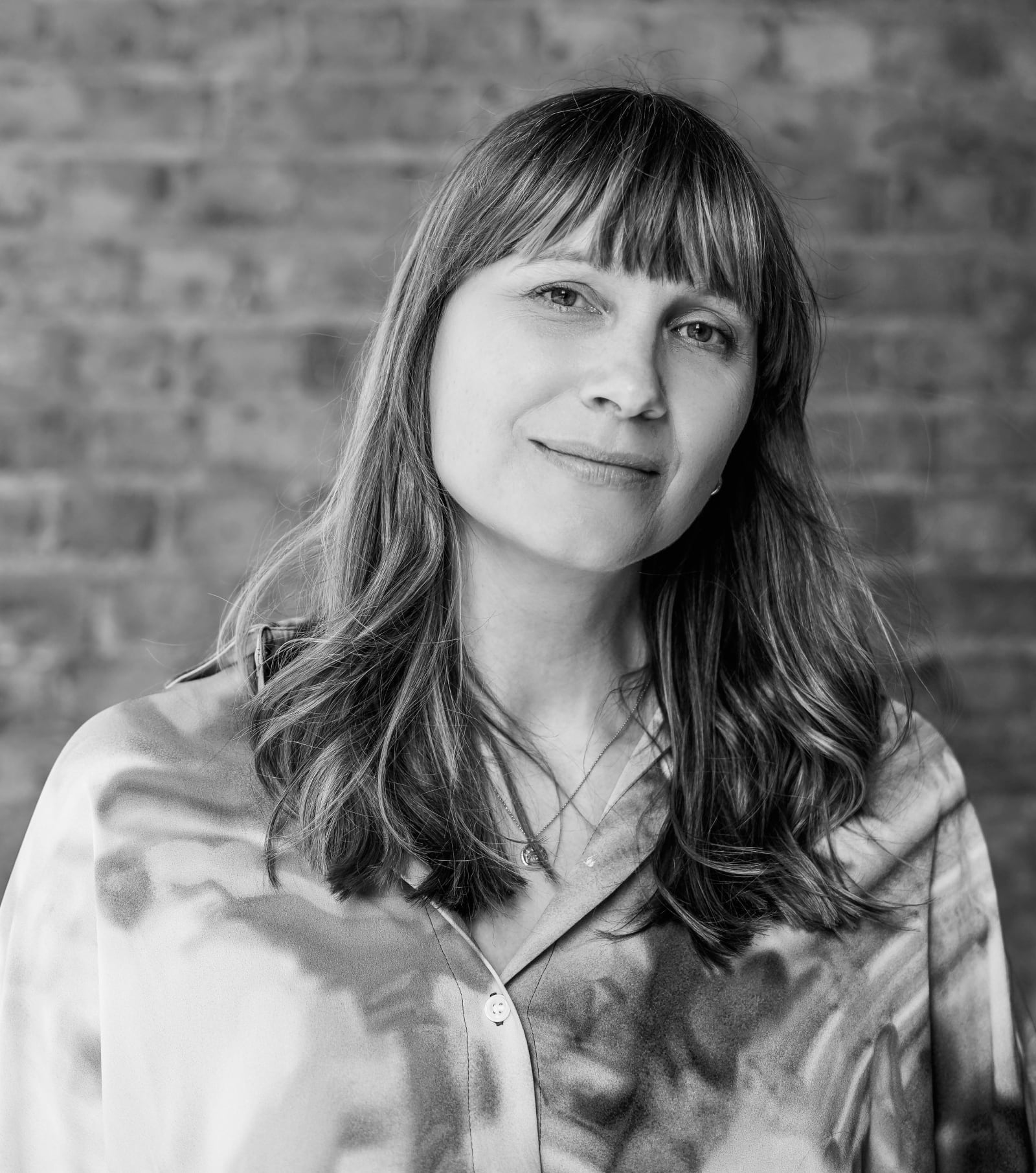
Melissa Wiederrecht is an American algorithmic generative artist who has lived and worked in Makkah, Saudi Arabia for the past decade. Trained in computer science, machine learning, and AI, she has been making generative art for over twenty years, since long before it had a name or an audience, and now exhibits internationally. She calls her work a "precise blur." Precise, because it is built entirely from mathematical code systems she writes herself. Blur, because what those systems produce is paradox, ambiguity, and in-betweenness. She works in the oscillation, the both/and: art that is extremely intentional yet overflowing with randomness, cold and mathematical yet emotionally moving, obviously a painting and obviously not, a single frozen frame and an infinite algorithm at once. Running through all of it is a bringing-together of traditional values and ancient forms with the most modern of media, code.
Melissa Wiederrecht has exhibited at the United Nations Headquarters, the Museum of the Moving Image, Gucci Art Space, Gazelli Art House, Art Dubai Digital, Art Blocks, and Feral File, among many others. Her work has also been showcased at prominent international venues and platforms, including HeK Basel, Unit London, GalerieData in Paris, Verse, VerticalCrypto Art (Berlin), and ArtRepublic Global during Miami Art Basel. Reflecting her impact on the digital art community, she was nominated for the Diversity Award at The Crypties by Decrypt Media in 2023.

Cosmic Vortex Patina
Cosmic Vortex is the animated evolution of Cosmic Rays, the algorithm I consider my masterpiece so far. Cosmic Rays began as a study of painting itself: I took the composition rules I had been learning from a book on the craft and tried to express them in code, parameterized, and iterated for months, adding and removing, to see what the equations would grow into. One day I accidentally overlaid the whole composition on top of itself in overlay blend mode, and the entire thing burst into color. When I posted the results, people independently kept reaching for the same words: power, scale, a thousand auroras exploding, the look of deep space. That is where the name came from. I want to be clear that it is not mysticism or new-age symbolism; it is scientific awe, the real scale and power of the universe, the cosmic microwave background, the feeling of looking at some unknown corner of space as it is still forming.
Cosmic Vortex takes the same code and sets it in motion, so the brushstrokes themselves move: a painting that is genuinely alive, which is something you can do with code and never with paint on a wall. So much of this work, for me, is the craft of it, whether I can actually pull it off in code, bringing the craft of painting and the craft of code together, generalizing it into an algorithm, and above all making something utterly gorgeous. Every iteration carries its own mood, wildly varied, and yet they all still hold together as compositions, as paintings.
Shown in Liminal Space, Unit London Web3 (their inaugural online showcase), February to March 2023, a two-artist exhibition with Linda Dounia. The artist's statement at the time: "In a random corner of the early universe, something is forming. Randomness and intention have come together in unknown proportions. Particles collide: the force is immeasurable; chaos and order battle it out. Meanwhile, the view is incredible."
generative art
portrait
01:40
2023
More from Melissa Wiederrecht
More on digital art
Collections with the artist