Fenêtre de l'âme: Xanthopsia 204
Fenêtre de l'âme: Xanthopsia 204
- Collage
- Pop
- Abstract
landscape
collage
01:00
n/a

Hypertexte Sémantique: Xanthopsia 192
Treeskulltown
Fenêtre de l'âme: Xanthopsia 204
Treeskulltown

Peaceful Reveries: Xanthopsia 170
Treeskulltown

The Meaning: Xanthopsia 165
Treeskulltown

Le Tramage : Xanthopsia 161
Treeskulltown

The City With Organic Mapping: Xanthopsia 212
Treeskulltown

Subtitles: Xanthopsia 148
Treeskulltown

LIRE
Treeskulltown
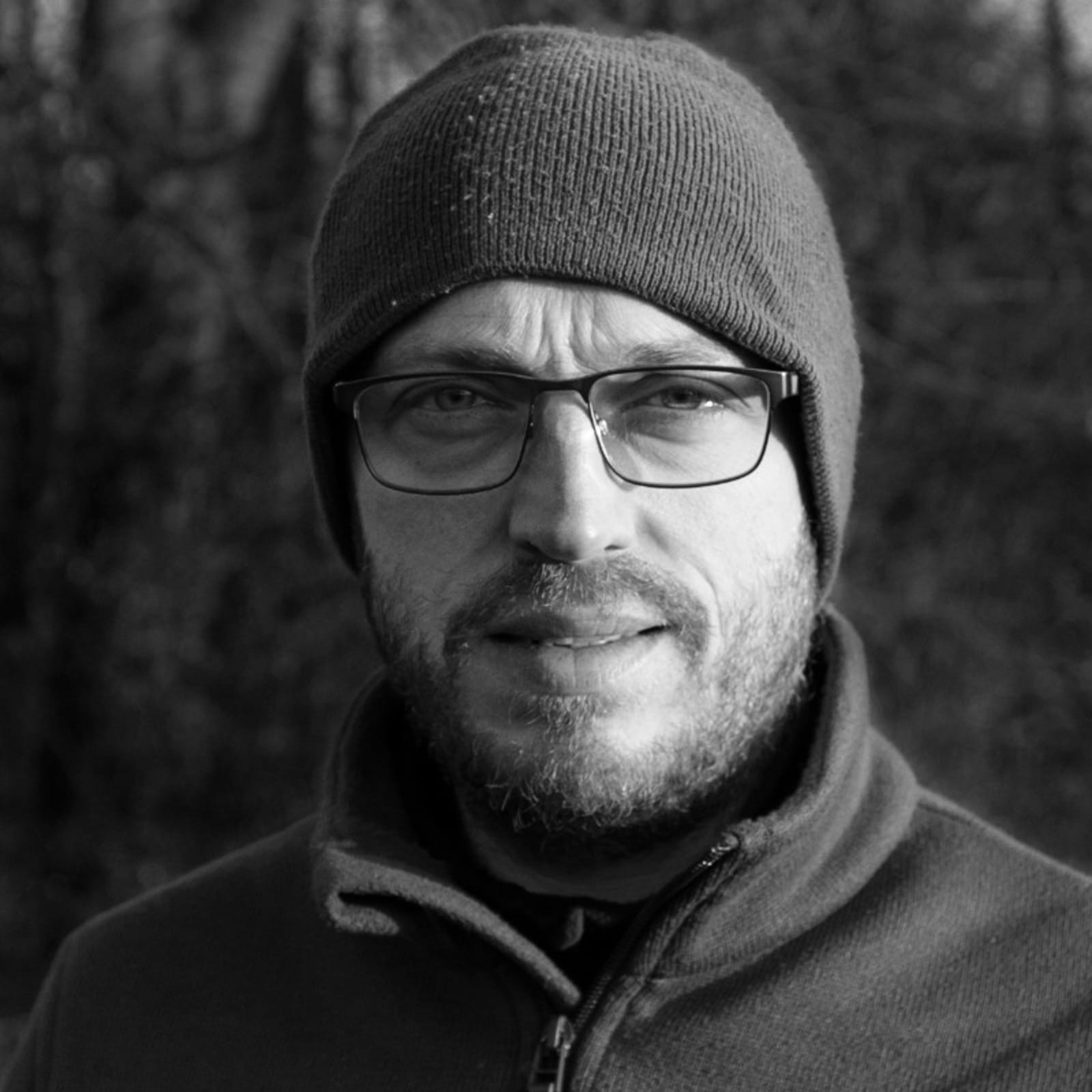
Treeskulltown is the conceptual avatar of a French multidisciplinary artist. For the last 4 years, he has been working in the field of digital art. Having grown up in the 80s, the emergence and development of computer technologies and techniques resonated with him and fuelled his curiosity. With 20 years of experimentation and hybridisation between physical and digital art under his belt, his work today is as much a personal quest as an artistic one. When he became a father, a need for simplicity and freedom, combined with the constraints of mobility, led him to return to the source of the desire to create and the pleasure of doing so, using organic materials (earth, paper, paint, cardboard, wood, etc.). It's a way of rediscovering meaning by naturally reconnecting with feelings and emotions. His aim is to develop a temporal parallel, a conversation, with the masters of classical art, to create a sub-reality to art history using mixed media animation techniques, thus creating an analogue palimpsest in digital strata.
Very involved in the crypto-artist community, his works are collected in Ethereum on FOUNDATION, in Tezos on OBJKT and in Bitcoin on GAMMA. Since 2022, his work has been exhibited and presented internationally at major events such as Art Crush Gallery, MOWNA, NFT NYC, NFT Japan, DAM Zine, NFC Lisbon, NFT Factory Paris, R HAUS Art Basel Miami, QUANTA Gallery London, IHAM NFT Gallery Paris. He was also selected in 2024 in The Hug 100 artists to watch and in the N3W Society Bookzine with the web3 agency: BRAWHAUS. His continual quest to reinvent himself and experiment provokes an emotional interaction with the viewer while guiding them with a subtle and conceptualised narrative.

Fenêtre de l'âme: Xanthopsia 204
“Window of the Soul” is a philosophical reactivation of van Gogh’s Still Life with Carafe and Lemons. More than a tribute, the work is a process-based device: a hybrid portal that shifts attention from the finished object to the intellectual approach. The project invites introspection on the “nourishment of the soul” through the prism of the Xanthopsia collection (yellow vision), a perception that chooses to find light even within shadow.
1. Philosophical Dimension: The Work as Catalyst
The work becomes a catalyst that activates a dialogue between the artwork, the viewer, and their inner self. It acts as a mirror in which abstract forms do not dictate emotion, but instead call upon those of the observer. The “nourishment of the soul” is not the lemon, but the act of seeing, thinking, and feeling. The work offers the frame — the window — within which the viewer projects the landscape of their own inner world.
2. Artistic Dimension: Archaeology of the Subreal
The reinterpretation reads as an archaeological excavation of the creative process:
- The Memory: van Gogh’s composition anchors the work in perceived reality
- The Gesture: a layer of abstract expressionism conveys raw emotion
- The Subreal: abstraction opens a window onto the unconscious, an inner landscape superimposed onto the scene, a pulsation of animated color, like the breath of inner life
3. Technological Dimension: Contemporary Hybridization
The mixed technique embodies our hybrid experience of the world:
- Acrylic painting anchors the work in materiality
- Photography translates the physical into digital
- Digital painting and minimalist animation give the work a temporality, a vital breath
The tangible object extends into immaterial space, reflecting our lives moving between the physical and the screen.
Conclusion: A Deep Reinterpretation
“Window of the Soul” is a machine for thinking about art today. By combining van Gogh’s psychological depth with a conceptual approach and hybrid techniques, the project explores the nature of perception, the active role of the viewer, and the evolving identity of the artwork.
- Tribute to van Gogh: Carafe and Dish with Citrus Fruit (Van Gogh Museum)
- Hybrid digital version: 3840 × 2160 px / 4K MP4 / 185 MB / 8 fps / 1/1 edition
collage
landscape
01:00
n/a
More from Treeskulltown
More on digital art
Collections with the artist