Des Strates Plus Profondes: Xanthopsia 190
Des Strates Plus Profondes: Xanthopsia 190
- Collage
- Pop
- Abstract
portrait
collage
01:00
n/a

Hypertexte Sémantique: Xanthopsia 192
Treeskulltown

Fenêtre de l'âme: Xanthopsia 204
Treeskulltown

Peaceful Reveries: Xanthopsia 170
Treeskulltown

The Meaning: Xanthopsia 165
Treeskulltown

Le Tramage : Xanthopsia 161
Treeskulltown

The City With Organic Mapping: Xanthopsia 212
Treeskulltown

Subtitles: Xanthopsia 148
Treeskulltown

LIRE
Treeskulltown
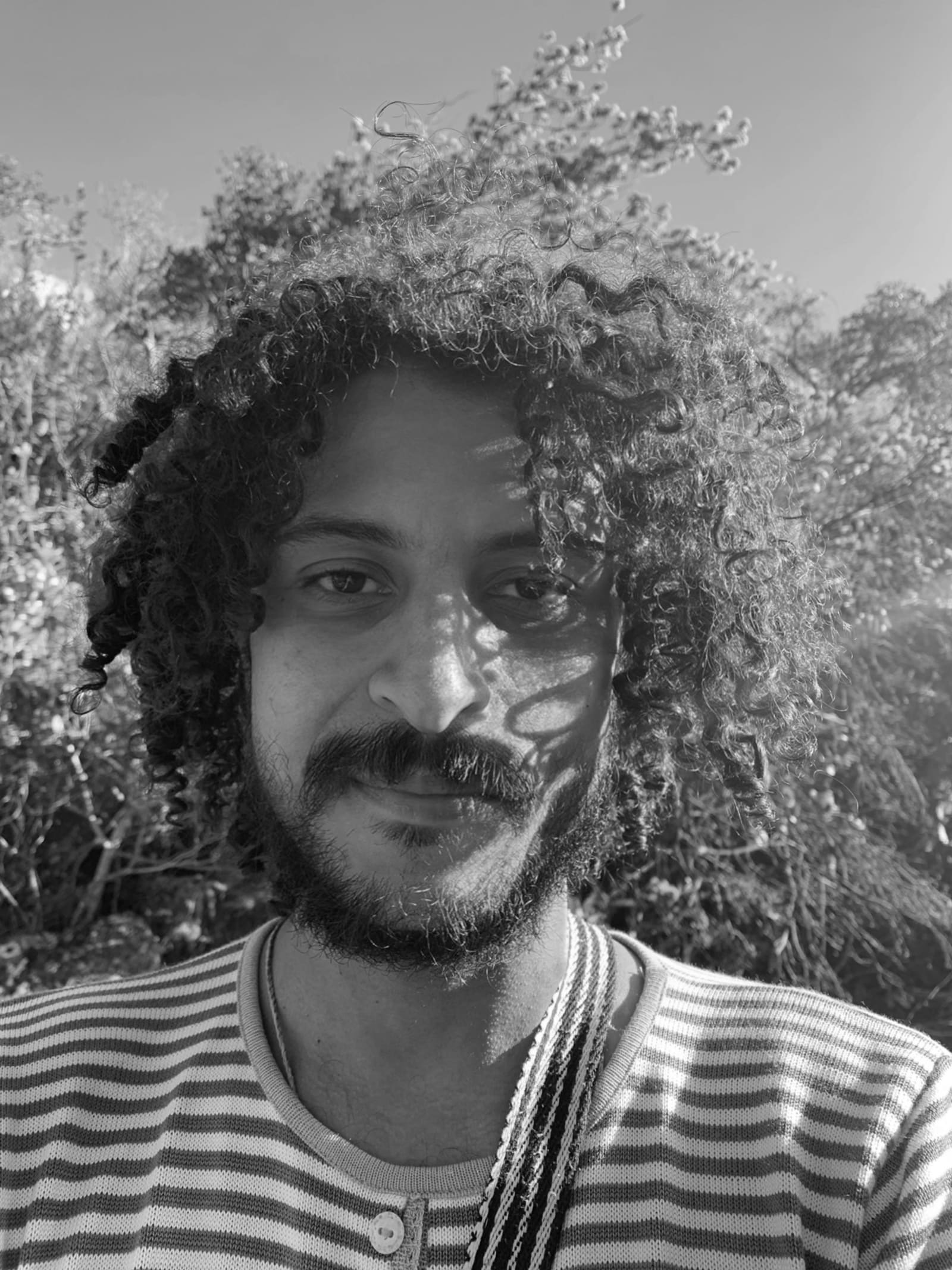
Treeskulltown is the conceptual avatar of a French multidisciplinary artist. For the last 4 years, he has been working in the field of digital art. Having grown up in the 80s, the emergence and development of computer technologies and techniques resonated with him and fuelled his curiosity. With 20 years of experimentation and hybridisation between physical and digital art under his belt, his work today is as much a personal quest as an artistic one. When he became a father, a need for simplicity and freedom, combined with the constraints of mobility, led him to return to the source of the desire to create and the pleasure of doing so, using organic materials (earth, paper, paint, cardboard, wood, etc.). It's a way of rediscovering meaning by naturally reconnecting with feelings and emotions. His aim is to develop a temporal parallel, a conversation, with the masters of classical art, to create a sub-reality to art history using mixed media animation techniques, thus creating an analogue palimpsest in digital strata.
Very involved in the crypto-artist community, his works are collected in Ethereum on FOUNDATION, in Tezos on OBJKT and in Bitcoin on GAMMA. Since 2022, his work has been exhibited and presented internationally at major events such as Art Crush Gallery, MOWNA, NFT NYC, NFT Japan, DAM Zine, NFC Lisbon, NFT Factory Paris, R HAUS Art Basel Miami, QUANTA Gallery London, IHAM NFT Gallery Paris. He was also selected in 2024 in The Hug 100 artists to watch and in the N3W Society Bookzine with the web3 agency: BRAWHAUS. His continual quest to reinvent himself and experiment provokes an emotional interaction with the viewer while guiding them with a subtle and conceptualised narrative.

Des Strates Plus Profondes: Xanthopsia 190
“Deeper Layers” is a conceptual and hybrid work that transcends homage to Vincent van Gogh, becoming a philosophical meditation on the nature of consciousness, creation, and perception in the digital age. By revisiting An Old Woman of Arles through the prism of subrealist abstraction, the work proposes an allegory in which layers of physical and digital paint symbolize the strata of thought, memory, and the unconscious. It shifts the center of gravity from the finished art object toward the intellectual and sensory process it initiates, becoming a “device” that activates an intimate conversation between the work, the viewer, and the depths of their own mind.
Expanded Development of the Conceptualization:
I. The Central Allegory: The Archaeology of Consciousness
The title, “Deeper Layers,” is the keystone of the concept. It establishes a geological metaphor for the human mind. The strata as creative and psychic processes: like layers of the earth that bear witness to time, pressure, and transformation, the work superimposes different “layers” of creation.
- The Original Layer (Van Gogh): The choice of An Old Woman of Arles is not incidental. It is a portrait of time itself, of life etched into a face. It forms the foundation, the historical and emotional sedimentary layer upon which everything else is built.
- The Gestural Layer (Acrylic Painting): The physical painting on canvas, inspired by abstract expressionism, represents the primal act, the subconscious impulse, raw making. It is a tectonic layer, full of energy, movement, and pure emotion, a visceral response to the original layer. It is the body thinking.
- The Contemplative Layer (Digital Painting and Animation): The digital painting and minimalist frame-by-frame animation embody reflection, a consciousness observing itself. No longer an explosive gesture, but a slow pulse, a flow of memory, a breath. This digital layer acts like erosion or wind, subtly revealing and altering the underlying layers. It is the conscious “re-reading” of the unconscious act.
This superposition creates an archaeology of consciousness. The work is not a fixed image, but a cross-section of an ongoing mental process, where thoughts, memories, and creative acts are inseparable and interdependent.
II. Philosophical and Psychological Resonance
This approach resonates with several currents of thought, shifting the work from a purely aesthetic field into a hermeneutic one (the art of interpretation).
- Philosophically: The concept aligns with phenomenology, which focuses on lived experience. The work is not an “object to be seen,” but a process to be experienced. The viewer is invited not to decode a hidden meaning, but to become aware of their own interpretive activity, of their own “layers” resonating with those of the work. Art becomes a mirror of the mechanism of thought.
- Psychologically: The metaphor of layers is a clear illustration of models of the psyche (conscious, preconscious, unconscious). The gestural acrylic expresses the unconscious. The digital animation reflects the work of the conscious mind that analyzes, remembers, and projects. The final work, in its hybridity, represents the “Self” as a complex system where deep impulses and reflective thought coexist. The “sensory conversation” becomes a kind of introspective dialogue between the viewer and the work.
- Mystically: The contemplation induced by the slow, minimalist animation opens a meditative dimension. The cyclical process and layering evoke life cycles, permanence, and transformation. It seeks the universal through a deeply personal inner experience.`
III. Technical Hybridity in the Service of Meaning: Digital Subculture and “Re-reading”
My technical choice is not a simple stylistic effect; it is the driving force of the concept.
- The Dialogue between Analog and Digital: It creates both tension and symbiosis. The photographed acrylic painting anchors the work in materiality, art history, and the unique trace of the hand. The animated digital painting projects it into immateriality, reproducibility, and the fluid language of digital subculture. It becomes a living palimpsest.
- Animation as Thought in Motion: Frame-by-frame animation is crucial. Its slow, non-fluid rhythm mimics the fragmented nature of memory or the “flicker” of consciousness. It is not a film, but a pulse. This technique allows for a deeper “re-reading”: it does not replace the original, but allows it to “breathe” differently, superimposing a digital temporality (the animation cycle) onto the fixed time of the painting.
IV. The “Xanthopsia” Collection: Duality and Altered Perception
The theme of “Xanthopsia” (yellow vision) envelops the work and strengthens its connection to Van Gogh.
- A Perception, Not a Condition: I treat xanthopsia not as a pathological symptom, but as a metaphor for altered and singular perception. It reflects the ability of the artist (and of any individual) to “find positivity even in dark moments,” to filter the world through their own sensitivity. This yellow vision becomes the symbol of the radical subjectivity of art.
- Duality and Coexistence: This “yellow” filter applied to van Gogh’s work highlights its fundamental duality: the tension between suffering (darkness, condition) and creative ecstasy (light, positivity). My work, “Deeper Layers,” embodies this same duality: tension between the past and the present, harmony between impulsive gesture and reflective thought, coexistence of the materiality of the canvas and the immateriality of code.
In conclusion, “Deeper Layers” is a rich artistic and philosophical proposition. It succeeds in moving beyond pastiche to become a conceptual reactivation. By using Van Gogh as a foundational layer, I construct a work that speaks both of him and of us — of our relationship to time, memory, and creation in a world where the physical and the digital form the new strata of our experience of reality. The work becomes a true philosophical device to be experienced.
- Tribute to Van Gogh: An Old Woman of Arles (Van Gogh Museum collection)
- Hybrid digital version: 2160 × 3840 px / 4K MP4 / 192 MB / 8 fps / 1/1 edition on @objktcom
collage
portrait
01:00
n/a
More from Treeskulltown
More on digital art
Collections with the artist