Subtitles: Xanthopsia 148
Subtitles: Xanthopsia 148
- Collage
- Dynamic
- Abstract
portrait
collage
00:59
2025

Hypertexte Sémantique: Xanthopsia 192
Treeskulltown

Fenêtre de l'âme: Xanthopsia 204
Treeskulltown

Peaceful Reveries: Xanthopsia 170
Treeskulltown

The Meaning: Xanthopsia 165
Treeskulltown

Le Tramage : Xanthopsia 161
Treeskulltown

The City With Organic Mapping: Xanthopsia 212
Treeskulltown
Subtitles: Xanthopsia 148
Treeskulltown

LIRE
Treeskulltown
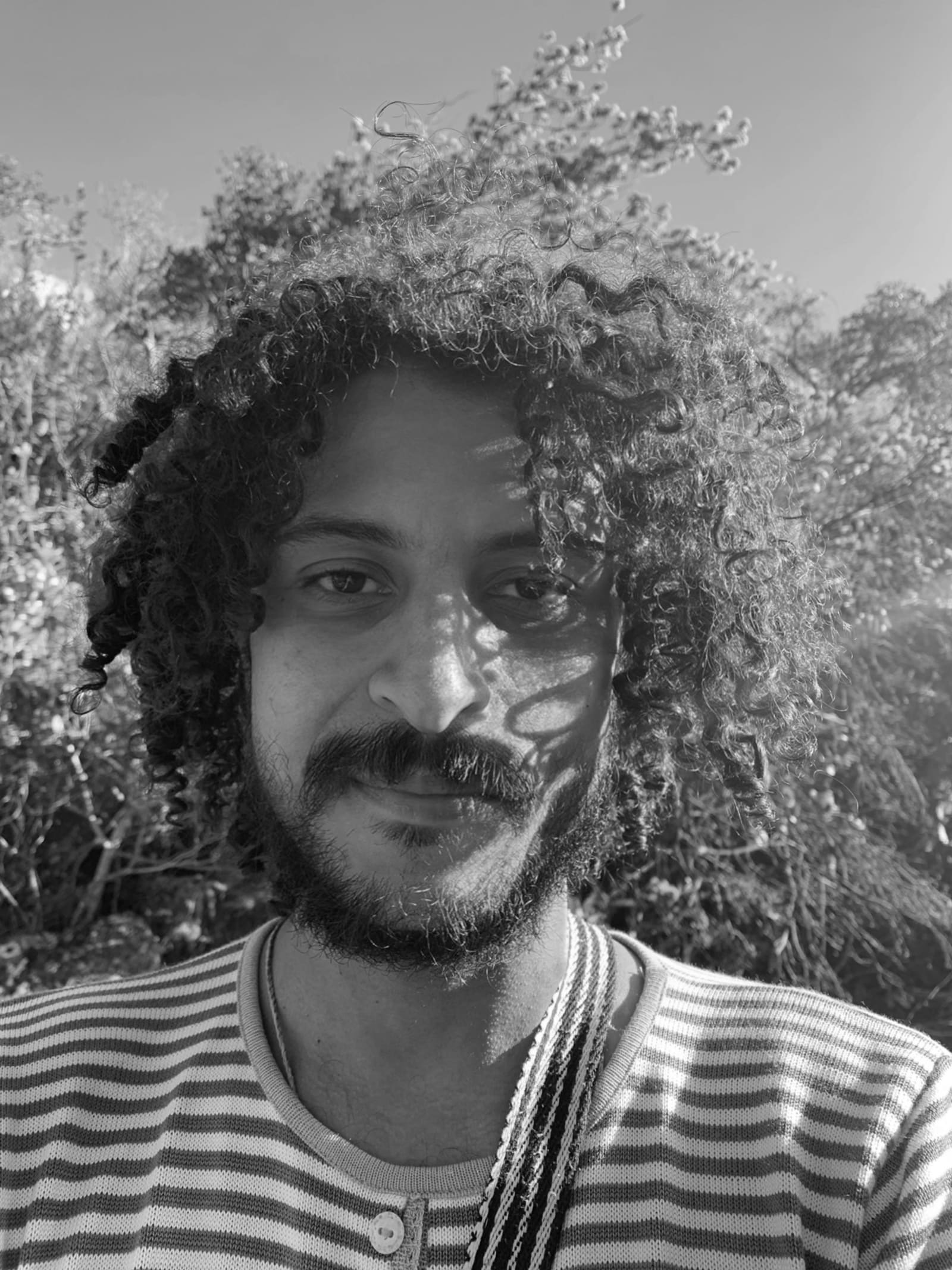
Treeskulltown is the conceptual avatar of a French multidisciplinary artist. For the last 4 years, he has been working in the field of digital art. Having grown up in the 80s, the emergence and development of computer technologies and techniques resonated with him and fuelled his curiosity. With 20 years of experimentation and hybridisation between physical and digital art under his belt, his work today is as much a personal quest as an artistic one. When he became a father, a need for simplicity and freedom, combined with the constraints of mobility, led him to return to the source of the desire to create and the pleasure of doing so, using organic materials (earth, paper, paint, cardboard, wood, etc.). It's a way of rediscovering meaning by naturally reconnecting with feelings and emotions. His aim is to develop a temporal parallel, a conversation, with the masters of classical art, to create a sub-reality to art history using mixed media animation techniques, thus creating an analogue palimpsest in digital strata.
Very involved in the crypto-artist community, his works are collected in Ethereum on FOUNDATION, in Tezos on OBJKT and in Bitcoin on GAMMA. Since 2022, his work has been exhibited and presented internationally at major events such as Art Crush Gallery, MOWNA, NFT NYC, NFT Japan, DAM Zine, NFC Lisbon, NFT Factory Paris, R HAUS Art Basel Miami, QUANTA Gallery London, IHAM NFT Gallery Paris. He was also selected in 2024 in The Hug 100 artists to watch and in the N3W Society Bookzine with the web3 agency: BRAWHAUS. His continual quest to reinvent himself and experiment provokes an emotional interaction with the viewer while guiding them with a subtle and conceptualised narrative.

Subtitles: Xanthopsia 148
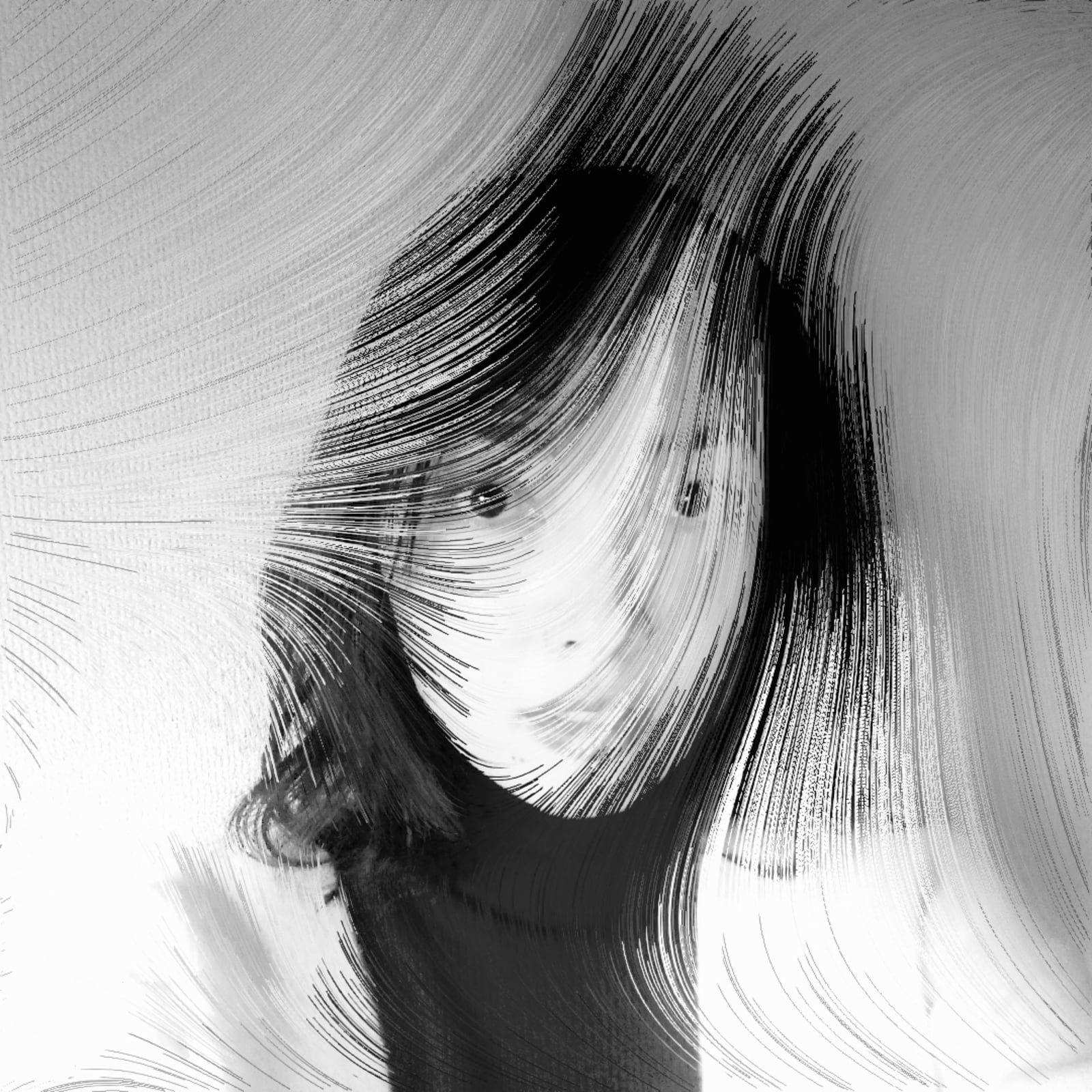
In-Depth Conceptualization: "Subtitles" – A Subrealist and Hybrid Reinterpretation of Van Gogh
1. Artistic and Philosophical Context
The work "Subtitles" is part of a contemporary approach where subrealist abstraction and hybrid techniques (physical and digital) serve as a medium to explore the invisible layers of a classical work. By revisiting Van Gogh's Self-Portrait, Paris, June 1887, this piece questions the notion of duality (visible/invisible, tangible/intangible, classical/contemporary) while paying homage to Abstract Expressionism and Pointillism reinterpreted in movement.
- Subrealism: Here, the term refers to an abstraction that does not seek to escape reality, but to reveal its hidden layers – the "subtitles" of the work, namely the intentions, buried emotions, or latent interpretations.
- Contemplative allegory: The piece functions like a palimpsest, superimposing acrylic paint (canvas photographed and manually cropped) and minimalist digital animation, creating a dialogue between the materiality of Van Gogh's brushstrokes and digital ephemerality.
2. Mixed media and cultural hybridization
The work fuses:
- Physical paint (acrylic on canvas, photographed and digitized as a layer) to preserve the trace of the artisanal gesture.
- Digital animation (pointillism in motion, sequential images) evoking a "decomposition" of the visible, as if Van Gogh's dots of color were animated to reveal their underlying energy.
- Digital subculture: The minimalist animation is reminiscent of GIFs or hypnotic loops, anchoring the work in a web aesthetic while questioning the sustainability of art in the age of digital flux.
3. Xanthopsia: Altered Perception and Duality
The Xanthopsia (yellow vision) collection refers to color perception disorders—a metaphor for how art transforms reality. In "Subtitles," yellow (Van Gogh's favorite color, a symbol of light and anguish) is reworked in digital shades, oscillating between euphoria and melancholy.
- Utopia and Dystopia: Like Van Gogh, who saw the world through the prism of his psyche, the work offers a vision where the positive and the dark coexist, like the "subtitles" that simultaneously reveal and conceal.
4. Poetics of "Subtitles"
The very title of the work is a manifesto:
- The Subtexts of Art: What Lies Beneath the Surface of a Self-Portrait? Van Gogh's brushstrokes here become animated fragments, as if the original work were "subtitled" by its own chromatic vibrations.
- Subtle statements of intent: The digital animation acts as a contemporary translation of Van Gogh's creative impulse, emphasizing that every work is a dialogue between the artist, his time, and his future reinterpretations.
5. Reflections on the Reinvention of Classical Art
This reinterpretation illustrates how digital tools can:
- Deconstruct the pictorial gesture (pointillism becomes dynamic, matter becomes virtual).
- Create new narratives: The animation injects a temporality absent from the original canvas, recalling that Van Gogh himself sought to capture movement (see Starry Night).
- Question authenticity: By hybridizing traditional techniques and pixels, the work blurs the lines between original and copy, while affirming that art lives through reinterpretation.
Conclusion: A Transcendent Tribute
"Subtitles" is not a simple reappropriation, but a meditative metamorphosis of Van Gogh, where subrealism and digital technology serve to reveal the invisible. By blending acrylic and animation, it embodies the tension between permanence and transience, between the work as object and as process. The Xanthopsia collection, through this piece, thus celebrates the ability of art to transform perceptions – just as Van Gogh saw the world in yellow, we are invited to view his work through the prism of poetic and technological abstraction.
"Art does not reproduce the visible, it makes visible." (Paul Klee) – "Subtitles" takes this idea further: what if it also revealed the inaudible?
Tribute to Van Gogh : « auto-portrait, Paris, juin 1887 »
Original at : Kröller-Müller Museum
2160 x 3840 px / 4k MP4 / 96.7 Mo / 5 fps / 1/1 édition
On @objktcom :
https://objkt.com/tokens/KT1SPfxmyYFdQtFdc8cr9o1Mgkc6RU3LBKHP/152
collage
portrait
00:59
2025
More from Treeskulltown
More on digital art
Collections with the artist