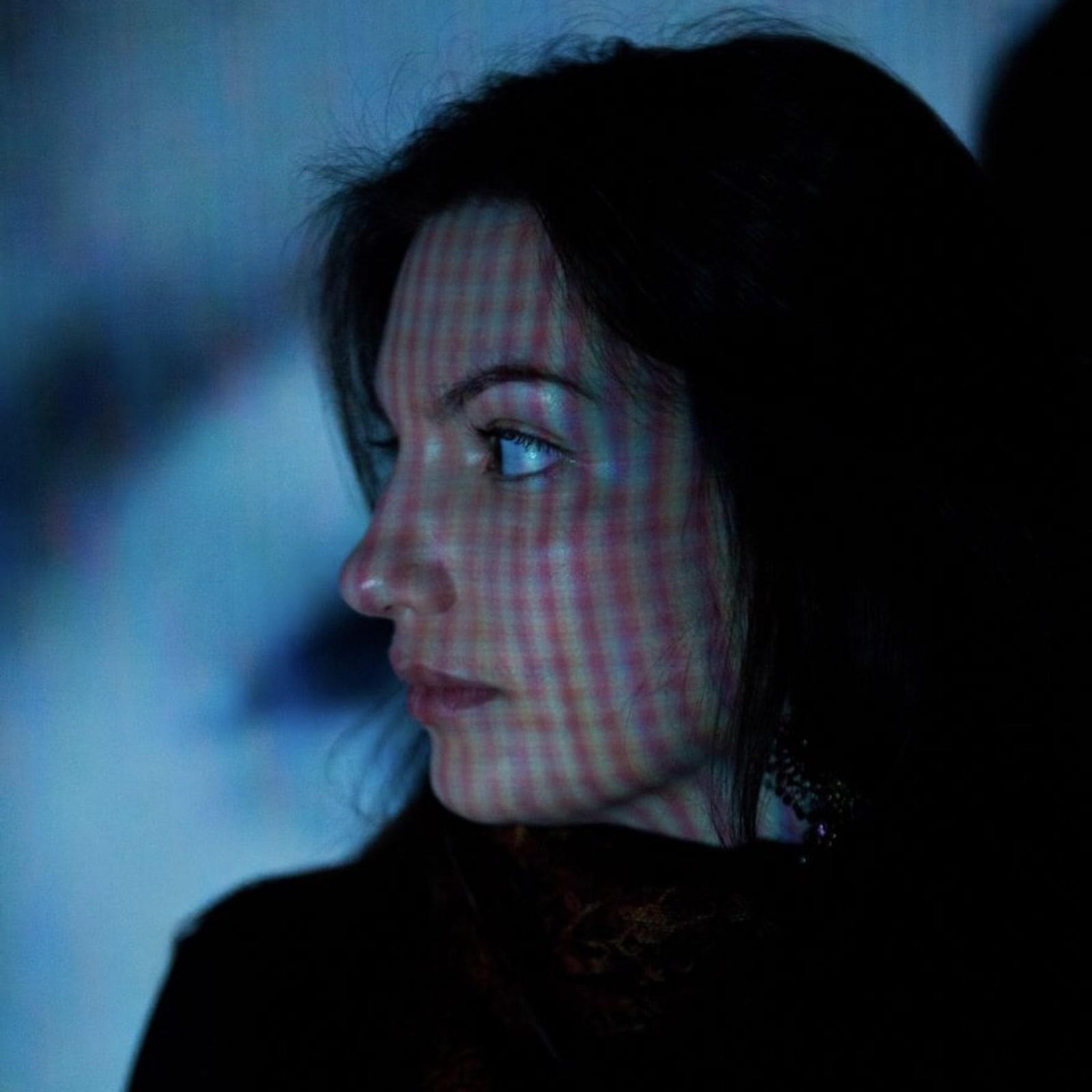
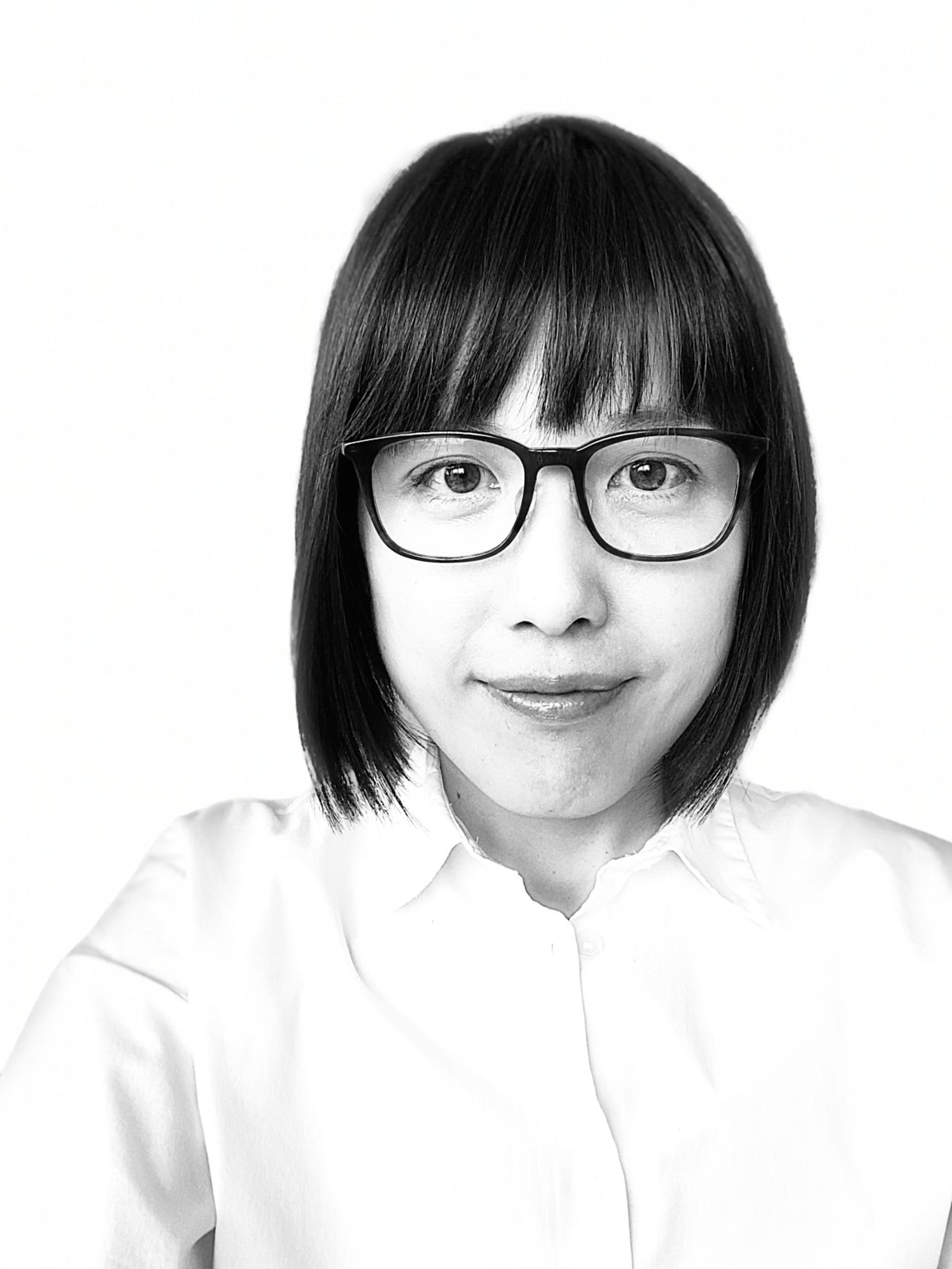
Marine Bléhaut

France

After her degree in art history and a master's degree in cultural management, Marine Bléhaut became an artist in parallel to her profession as a graphic designer. Inspired by anonymous photographic archives, experimental cinema and several references in contemporary drawing, she creates video collages, drawings and photography. Her video collages, or film collages, are made from fragments of archives. For Marine, the archives as fragments of our memory and our stories are an important raw material, to realize other fragmented stories, to explore the fragile and obscure parts of the human and our collective memory. With this visual language that is fragmented by nature, Marine seeks to create new perspectives on our strengths and weaknesses, our bodies and our minds, with an immersive character.

In this continued spirit of fragmentation, Marine also draws abstract and cellular works in ink, and is currently working on projects of archival details reinterpreted through drawing. Interested in AI, she also works around intimate memory and anonymous photographs generated by AI. The artist is part of the New French Touch collective, and is represented in the catalog of the '100 women to follow in NFTs' by GxrlsRevolution, a collective founded by Annelise Stern and JessyJeanne, and participates regularly in exhibitions at IHAM Gallery and the NFT Factory, curated by Benoit Couty and Lucie-Eléonore Riveron.


Marine_Bléhaut_Collage.jpg

I Can't Remember

I_Can_t_Remember_Marine_Bléhaut_Video.mp4

"This is a story I can't remember. I can't remember the names, and what exactly happened. 

But I remember the feelings and some details. There was joy, sweetness, laughs, death and decay. I try to remember what happened, but it's all blurry now." 

Memory is not really a bunch of data stocked in a room, it's a very complex process that constantly recreates the past, with fragments of data. When we remember something, the memory is recreated at the same time.

So it's always contemporary, and more creative than we think. In that sense, I believe AI is very interesting, because it creates other fragments of ourselves and makes us imagine another past, with broken stories and fragmented narratives.

Link to collect artwork

technique

video

format

landscape

duration

01:29

year

2023

WANT TO BRING ART INTO YOUR SPACE?

More from Marine Bléhaut

More on digital art

Generative art
Generative art refers to a way of creating artworks using an autonomous system. In digital art, these are usually generated from code and algorithms created by the artist, often with certain predefined parameters or systems. Although these parameters guide the final outcome of the work, generative art is generally a surprising way to create artworks, as the results are often unexpected and the number of possible outcomes can be infinite.
AI
AI art is a branch of generative art that uses artificial intelligence. Unlike other generative artworks, AI artworks use specific complex algorithms and models derived from machine learning. The most common methods for creating AI art today are GANs (generative adversarial networks) or proprietary prompting platforms such as ChatGPT, Sora, Midjourney, or Dall-e.
3D
3D art uses 3D software such as Blender, Cinema4D, Houdini, or video game software such as Unity to create works of art. In 3D works, artists can either arrange assets (the 'objects' in a 3D artwork or world) that they have created themselves or purchased from other creators to create elaborate environments and scenes (an approach to 3D art called 'set dressing'), or specialize in sculpting, which involves creating their own objects and assets.
Photogrammetry
Photogrammetry is a specialized 3D technique that allows 3D objects to be created from numerous photographs taken of an object or scene from multiple angles. These photos are then compiled to determine the specific positioning, shape, and dimensions of the object in space, and then converted into a 3D model. Initially developed for engineering and urban planning, photogrammetry has become a way for artists to produce extremely accurate 3D models from real-life images.
Collage
An extension of the traditional, plastic approach to collage, digital collage involves searching for and cutting out multiple images, extracting them from their original context, and recomposing them in a new arrangement to create a work of art. Artists can use their own photographs or find images on the internet.
Illustration
Digital illustrations are created using software such as Adobe Illustrator, Photoshop, or Procreate. As with drawing on paper, the artist uses a stylus to sketch a figure or object, usually on a tablet, to construct a scene or artistic universe. Unlike traditional drawing methods, digital illustration is much more forgiving, as mistakes can be easily corrected and drawn elements and objects can be easily moved around within a scene.
Video
Video artworks primarily use a recording camera, but may sometimes include additional post-processing or editing to distort, modify or add additional elements to the image. Some artists use state-of-the-art recording equipment to create macro zoom-ins or time lapses, privileging fidelity to the subject matter. Others use additional softwares to significantly modify or warp the video, creating an alternative perspective on the world that surrounds us.

Collections with the artist

  • gif_𝖊𝖗𝖗𝖔𝖗_3_go✨_Victor_Arce_3D.mp4
    Internet Age
    58 artworks
  • Pyramid_of_Giza_Obvious_AI.mov
  • Shared_memories_Benjamin_Bardou_Photogrammetry.mp4
  • +500
    artists
    View more
    +10k
    artworks
    View more

    Where did you scan from

    RATE YOUR EXPERIENCE