ARURA - Horizontal
ARURA - Horizontal
- Video
- Nature
- Meditative
landscape
video
03:50
2022

RECYCLED
Ozan Turkkan
ARURA - Horizontal
Ozan Turkkan

ARURA - Vertical
Ozan Turkkan

TRANS FORM #1
Ozan Turkkan

APSU
Ozan Turkkan

APSU - Vertical
Ozan Turkkan

TRANS FORM #2
Ozan Turkkan
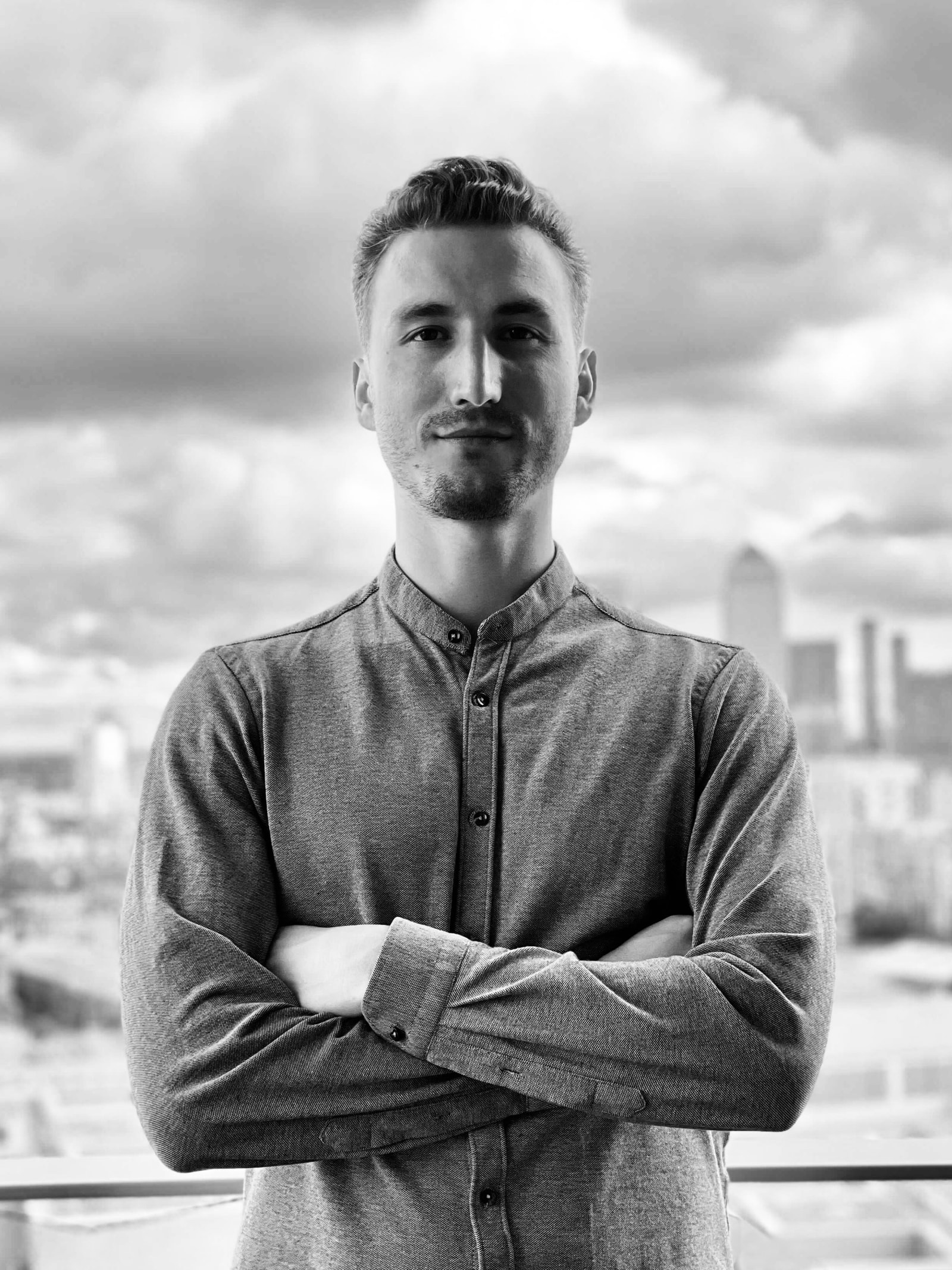
Vienna-based new media artist Ozan Turkkan works at the intersection of art, science and technology. His work is centred on experimental digital media, focusing on generative and algorithmic art, AI (Artificial Intelligence), mixed reality experiences, digital archives, interaction, and motion as a reflection of the impermanent nature of existence, and human and social behaviour. He uses technology as a canvas to create innovative and engaging digital art installations. He is a co-founder of the NODE Media Lab, Vienna Vienna-based non-profit multi-disciplinary creative establishment with the main focus on research and production of interdisciplinary experiences around new media art, science and technology.
Living in numerous cities throughout his life Ozan Turkkan has developed a sense of multiculturalism and cosmopolitanism which characterised his works. Complicated structures, conflicting and coexisting colours, and diversity have been parameters to push the artist to stress a complex field that is converging around the art, new technologies, and the sciences of nature.
He likes to explore the many-folded boundaries between science, art, and new technologies and combine different media elements in a creative process. Before the first steps in digital media, he studied and practised various art disciplines in Philadelphia, Salamanca, and Barcelona, collaborating with numerous institutions and art centres. After he graduated from The University of Salamanca, he received his Master's degree in Multimedia at BAU (Escola Superior de Disseny, Universitat Central de Catalunya) in Barcelona, where he lived and worked for many years as a new media artist.
His work has been exhibited in Art Centers, Museums, and Galleries such as; Santa Monica Art Centre Barcelona, Reina Sofia Museum Madrid, Centre of Contemporary Art Luigi Pecci Florence, Torrance Museum Los Angeles, Victoria House London, Lincoln Center NY, Banannefabrik Luxembourg, Europalia Art Festival Brussels, Les Brigittines Contemporary Arts Centre Brussels, Museum of Contemporary Art Belgrade, Santral Istanbul, Akbank Art Centre Istanbul, LOOP Videoart Festival Barcelona, Rotterdamse Schowbourg Rotterdam, WUK Vienna, Ars Electronica, Zifergauz St. Petersburg, Künstlerhaus Bregenz...
ARURA - Horizontal
The focal point of Ozan Turkkan's new media practices, which is based on continuous research that has been going on for over 15 years, is the fractal geometric structure of nature and the generative systems it uses to create itself.
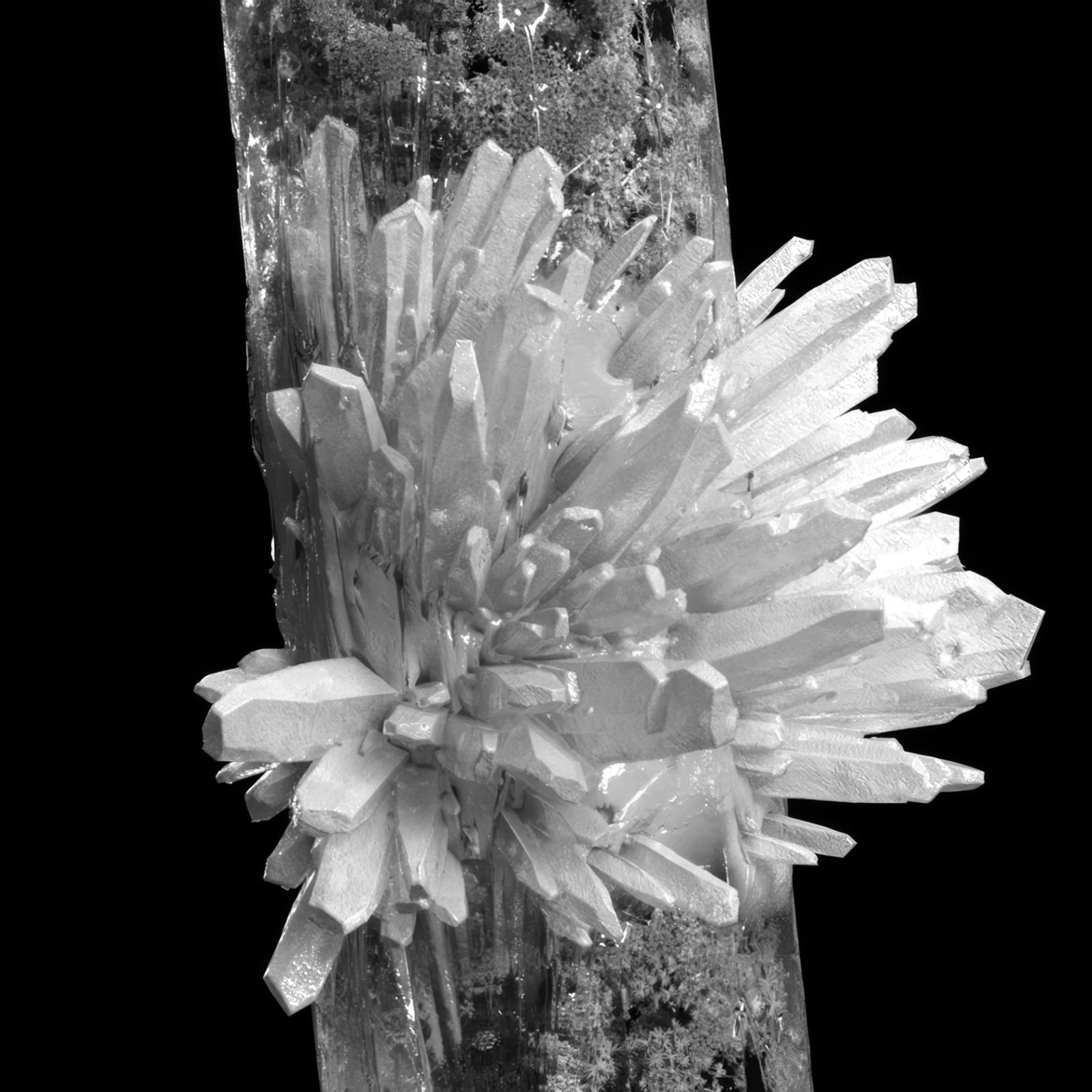
“Arura” is an AV installation produced as a result of the research project focusing on Transitional Forms, Biodiversity and the fractal geometric structure of these biological forms in nature and the variability of this geometry over time. During the production process, more than 2 million drawn living forms that have been studied for centuries in the Biodiversity Heritage Library were reanalysed, approximately 10 thousand were scanned and over 2 thousand were processed using Creative Coding and AI (Artificial Intelligence) tools, and the geometry of these living forms was extracted and recreated for the installations.
Although Transitional Forms are currently used in AI (Artificial Intelligence), it is a concept used in biology within the theory of evolution. For example, it is used to explain the intermediate forms of a creature that lived in water 25 million years ago and a creature that lives on land now. Of course, this has an intellectual dimension, as well as a social and psychological dimension. As a thought evolves, all the in-between forms become Transitional Forms. Of course, if we think of this as a process that has no beginning and no end, everything exists in continuous.
Transitional Forms and a constant change. The primary source of inspiration in this process is water and the bond of life and life forms in all nature to it. Arura is a Homeric Greek word with the original meaning "arable land", derived from the verb "plough". The word was also used generally for earth, land and fatherland.
video
landscape
03:50
2022
More from Ozan Turkkan
More on digital art
Collections with the artist