Christophe Raynal

France

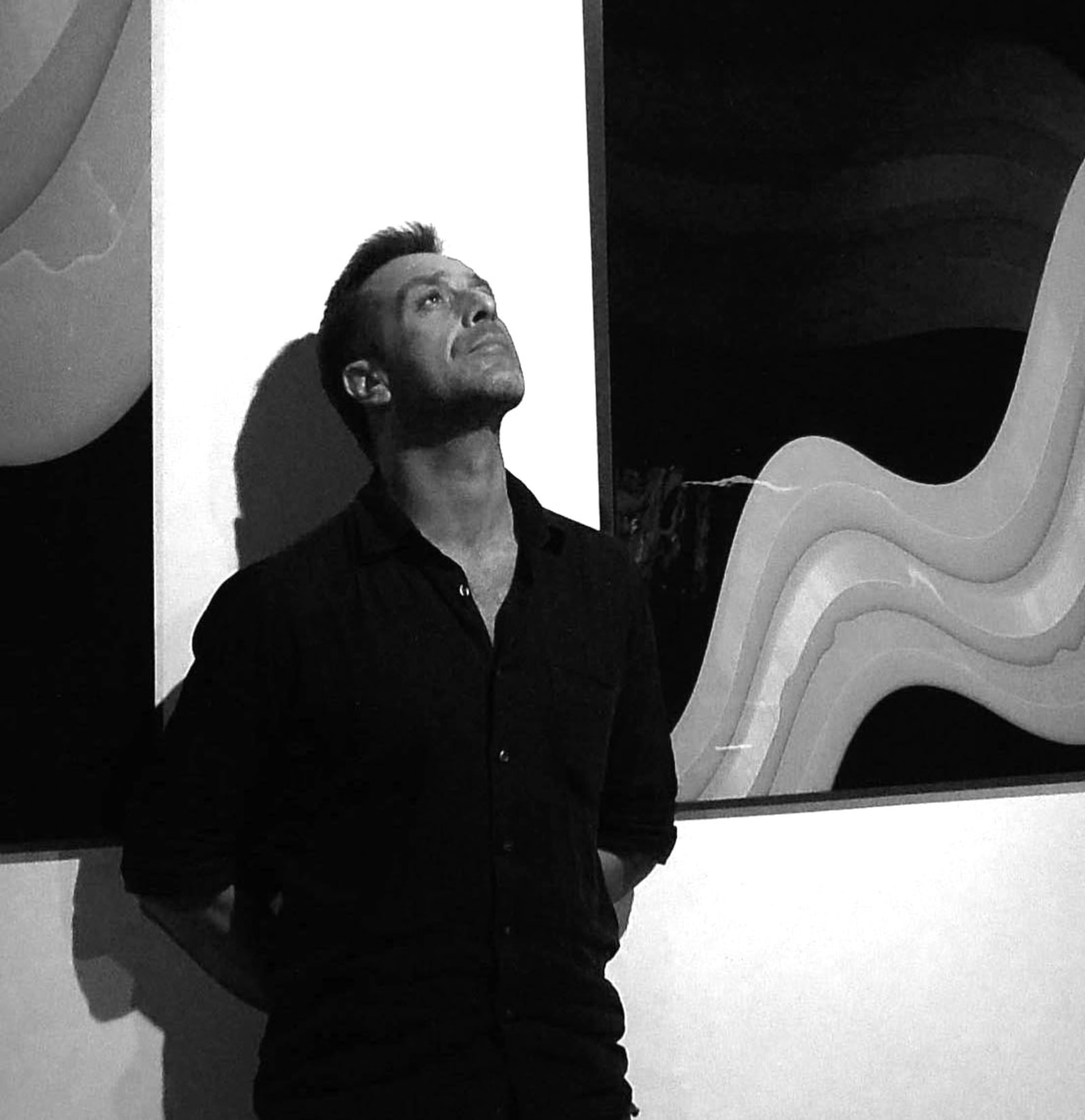
Christophe Raynal is a multidisciplinary artist whose work is distinguished by a profound exploration of materials, shapes and colors. He deftly navigates between large-format visual creation, sculpture, lighting design and digital works broadcast on large screens, creating graphic universes that challenge and invite reflection. His innovative approach transcends the traditional boundaries of each medium, resulting in a harmonious fusion of classical and contemporary techniques.


Christophe's work is characterized by a perfect harmony between art and architecture. He collaborates closely with architects and interior designers to create unique pieces that complement and enrich the spaces they occupy. Each work is designed specifically for its environment, taking into account lighting, perspective and surrounding materials. This bespoke approach creates unique, personalized atmospheres, adding an artistic dimension to residential, commercial and public buildings. Christophe Raynal's creations are an integral part of architectural projects in New York, Miami, Chicago, Paris, Bangkok, Seoul, Kuala Lumpur, Tokyo, New Delhi, Geneva, Heisenberg, Zermatt, Beirut, Saint-Tropez, Colombes, Troyes, Reims.

Christophe_Raynal_Video.jpg

JUICY METAL

JUICY_METAL_Christophe_Raynal_Video.mp4

Christophe Raynal est un artiste vidéo digital reconnu pour l'élégance et la profondeur de ses œuvres. Une caractéristique notable de son style est la lenteur des mouvements dans ses vidéos, qui invite les spectateurs à une contemplation prolongée et méditative.


Cette approche lente permet de saisir les subtilités et les détails de chaque scène, accentuant les textures et les nuances visuelles. En ralentissant le rythme, l’artiste digital crée une atmosphère de sérénité et de réflexion, offrant au public une expérience immersive qui contraste avec le flux rapide des images dans notre monde numérique actuel. La lenteur devient ainsi un moyen de redécouvrir la beauté et la complexité du mouvement, tout en encourageant une connexion plus profonde et introspective avec l'œuvre.

technique

video

format

portrait

duration

00:16

year

2024

WANT TO BRING ART INTO YOUR SPACE?

More from Christophe Raynal

More on digital art

Generative art
Generative art refers to a way of creating artworks using an autonomous system. In digital art, these are usually generated from code and algorithms created by the artist, often with certain predefined parameters or systems. Although these parameters guide the final outcome of the work, generative art is generally a surprising way to create artworks, as the results are often unexpected and the number of possible outcomes can be infinite.
AI
AI art is a branch of generative art that uses artificial intelligence. Unlike other generative artworks, AI artworks use specific complex algorithms and models derived from machine learning. The most common methods for creating AI art today are GANs (generative adversarial networks) or proprietary prompting platforms such as ChatGPT, Sora, Midjourney, or Dall-e.
3D
3D art uses 3D software such as Blender, Cinema4D, Houdini, or video game software such as Unity to create works of art. In 3D works, artists can either arrange assets (the 'objects' in a 3D artwork or world) that they have created themselves or purchased from other creators to create elaborate environments and scenes (an approach to 3D art called 'set dressing'), or specialize in sculpting, which involves creating their own objects and assets.
Photogrammetry
Photogrammetry is a specialized 3D technique that allows 3D objects to be created from numerous photographs taken of an object or scene from multiple angles. These photos are then compiled to determine the specific positioning, shape, and dimensions of the object in space, and then converted into a 3D model. Initially developed for engineering and urban planning, photogrammetry has become a way for artists to produce extremely accurate 3D models from real-life images.
Collage
An extension of the traditional, plastic approach to collage, digital collage involves searching for and cutting out multiple images, extracting them from their original context, and recomposing them in a new arrangement to create a work of art. Artists can use their own photographs or find images on the internet.
Illustration
Digital illustrations are created using software such as Adobe Illustrator, Photoshop, or Procreate. As with drawing on paper, the artist uses a stylus to sketch a figure or object, usually on a tablet, to construct a scene or artistic universe. Unlike traditional drawing methods, digital illustration is much more forgiving, as mistakes can be easily corrected and drawn elements and objects can be easily moved around within a scene.
Video
Video artworks primarily use a recording camera, but may sometimes include additional post-processing or editing to distort, modify or add additional elements to the image. Some artists use state-of-the-art recording equipment to create macro zoom-ins or time lapses, privileging fidelity to the subject matter. Others use additional softwares to significantly modify or warp the video, creating an alternative perspective on the world that surrounds us.

Collections with the artist

  • For_the_Love_of_Carpets_2_-_Horizontal_Waref_Abu_Quba_Video.mp4
    Textiles and Textures
    43 artworks
  • Sweet_Dreams_Kaoru_Tanaka_Generative_art.mp4
  • Cloth_String_Gabriel_Morala_3D.mp4
  • Between_the_four_stone_walls_the_echo_sounds_soothing_Yves_Peitzner_Generative_art.mp4
  • Flower_Double_Red_Alex_McLeod_3D.mp4
  • +500
    artists
    View more
    +10k
    artworks
    View more

    Where did you scan from

    RATE YOUR EXPERIENCE