Memory #381: Dance of Colors / Henri Matisse
Memory #381: Dance of Colors / Henri Matisse
- AI
- Meditative
- Abstract
landscape
ai
00:30
2024

Imaginary Landscape No. 4
Benjamin Bardou

Les Champs Magnétiques
Benjamin Bardou

Lumière virtuelle
Benjamin Bardou

Memory #412: Sculpture's Silhouette / Henri Matisse
Benjamin Bardou

Memory #3: Sunflower Yellow Vibrance / Vincent Van Gogh
Benjamin Bardou

Memory #183: The Embrace of Destiny / Gustav Klimt
Benjamin Bardou

The End
Benjamin Bardou

Ideal
Benjamin Bardou
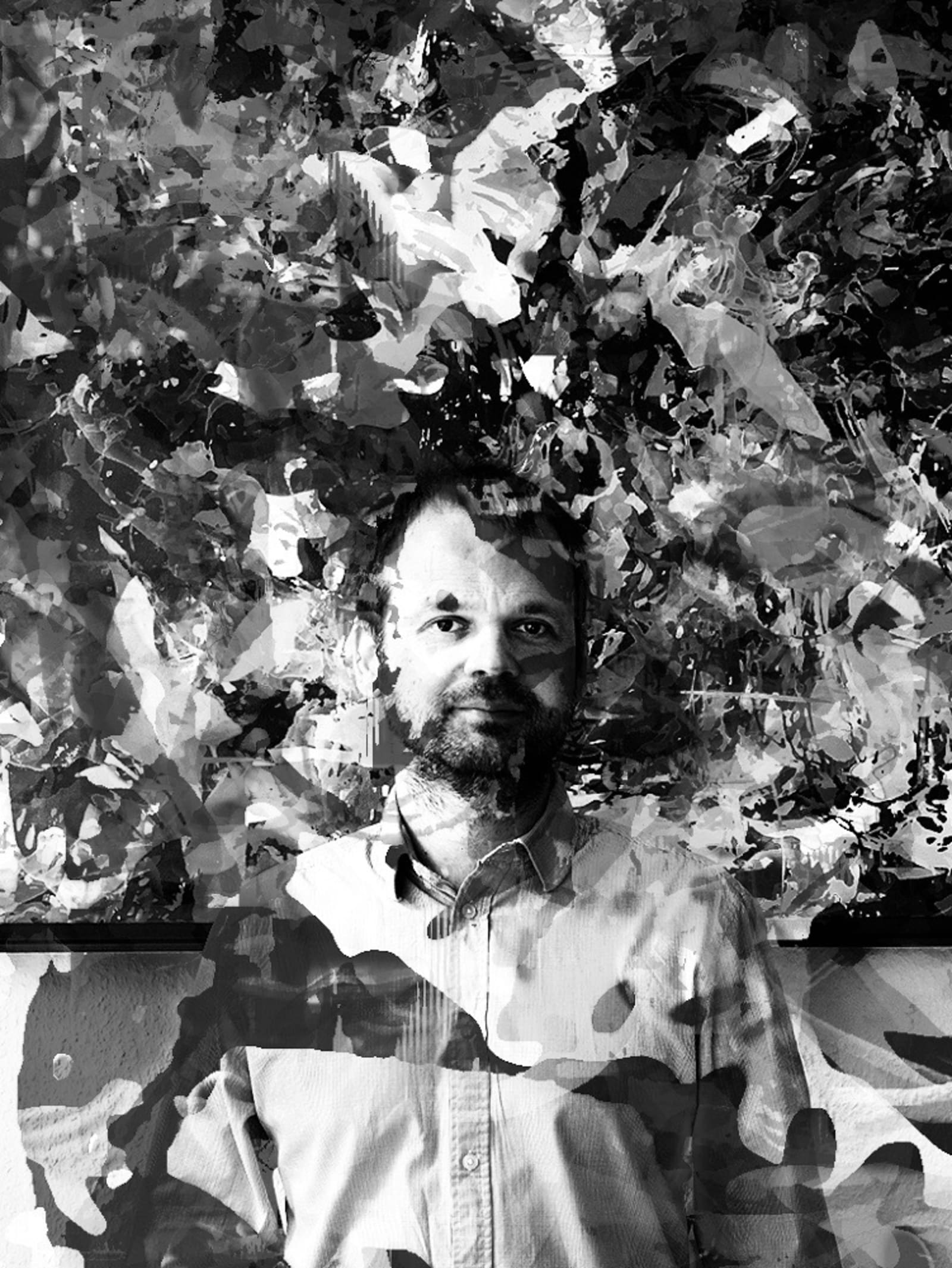
Benjamin Bardou is a filmmaker, artistic director, and director based in Paris. He received his artistic training at the Georges Méliès School in Orly, an institute specializing in the teaching of animation and visual effects techniques. Benjamin Bardou explores the city, nature, and memory through photogrammetry, a 3D capture technique he has been developing and drawing inspiration from since 2014. In this way, he harnesses technology to serve memory, reconstructing the memories and emotions evoked by the city and art. One of his primary sources of inspiration is the work of the German philosopher Walter Benjamin, from whom he has notably borrowed the concept of historical materialism, visually reinterpreting it within the context of his works. His goal is to work with historical materials as well as simple, mundane urban elements to penetrate and touch the collective unconscious. Inspired by films such as Metropolis and Ghost in the Shell, the photographs of Berenice Abbott, and the world of Katsuhiro Otomo’s manga, Benjamin Bardou sets out in search of the city’s soul. At night, the multitude of streets and the lit windows of the buildings lend themselves to daydreaming and imagination. According to him, the city’s form mirrors that of the memory of places.
At Mikros Image, a digital post-production and visual effects company, he now works on feature films, commercials, and music videos. He has collaborated with artists such as Ridley Scott, Liam Wong, and Ikumi Nakamura, and has also worked with companies like Apple, Meta, and Microsoft. His work has been exhibited around the world, from Brazil (FILE Machinima) to South Korea (K Museum of Contemporary Art), including stops in France (Musée des Arts et Métiers, Collectif Jeune Cinéma, and Motion Motion) and Portugal (Centro das Artes), among others.
Memory #381: Dance of Colors / Henri Matisse
Like a dream you only become aware of when you wake up, it's only when it's finished that this project appears to me as a synthesis of two themes that I'm obsessed with: memory and painting.
The memory.
It's the kind of subject that doesn't present itself to you straight away, but rather through contact with other artists who leave their mark on you without really knowing why. Chris Marker, Godard or Hitchcock were among them. Fascinated by their work, they were my masters in what I later came to understand as the art of film editing.
The poetic power of cinema's images was a revelation in my relationship with this art form. I had come to understand that it was possible to create mental images simply by juxtaposing two images that were distantly related. Circling around signs I was still struggling to grasp, but constantly experimenting, it was only by chance that I discovered point clouds. This technique enables a frozen moment to be reconstructed in three dimensions from a series of shots. The idea is to walk down a street with a filming device and visit the place, a posteriori, but from another angle, another point of view, in a different relationship to the past moment.
It is then possible to see motifs or situations that had been captured during my passage, but which my consciousness had not been able to grasp. In this way, I had before me something that seemed to be a skeleton or ghost of the past - in other words, a form of memory that could be relived ad infinitum.
Cities harbor all kinds of such memories, which in turn shape the identity and narrative of cities. That's why I've spent years exploring them, gradually evolving the very aesthetics of the clouds of dots into an animated version, in order to render not a frozen moment of the past but rather moments of life in motion, and, in a duller, more colorful style: in a word, more painterly.
The painting.
How do you convey the memory of an aesthetic experience as intense as that of the Death of Sardanapalus or Las Meninas? How do you convey the density, the depth, the hic et nunc of a painting? Perhaps by trying to trace the contours of this experience, so as to restore not an exact copy, but rather the traces of its memory.
Artificial imagination was a decisive factor in implementing this idea. Indeed, wouldn't this space be a reservoir of dreamed images, as in cities, which we would then have to survey in order to reveal repressed memories and forgotten recollections?
My ambition was to explore this pictorial space in the same way as I might have strolled through the city using my own pointclouds technique. This time, I wanted to get close to the painters' imaginations, not by restoring the works themselves, but rather the imprint they had left on my memory. It was like returning to a neighborhood where I had lived in my youth, to rediscover the same sensations, my still-intact aspirations or a lost love.
In its own way, Memories of an Exhibition uses the artificial imagination to revive, for a few moments, these moments suspended in time, perhaps saving them from oblivion.
Painting memories
What remains of artworks when they escape our gaze? There remain traces produced by their memories. A memory made up of a series of patterns which link together to constitute images. In this action close to the imagination, it is, once again, a matter of bringing artwork to life. It’s about bringing past forms back to life by updating them in our present.
Memory, a province of the imagination
An artwork is the precipitate of the artist's imagination. This act of projecting images which will then become matter is similar to that of memory where mental images are arranged with a view to reconstructing the past. These two movements, one turned towards the future and the other towards the past, meet in latent space. Here, artificial imagination acts as a machine to restore the memory of an aesthetic experience. It becomes a universal canvas where Bonnard, Monet and Van Gogh coexist, not as figures of the past, but as potentialities, echoes of what could have been and what could happen. In this imaginary space, color serves as a detonator for a reminiscence of artworks sometimes seen, sometimes dreamed of. Memories of an Exhibition was born from this crazy desire of a painter: to paint memories.
Collected by antxx24
ai
landscape
00:30
2024
More from Benjamin Bardou
More on digital art
Collections with the artist