Collision - Vertical
Collision - Vertical
- Generative art
- Abstract
format
portrait
technique
generative art
duration
03:00
year
n/a
Transport

Abstract
Generative art
Struct - arc #2 - Vertical
Shohei Fujimoto

Abstract
Generative art
Meditative
Struct - arc #1
Shohei Fujimoto
Abstract
Generative art
Collision - Vertical
Shohei Fujimoto

Abstract
Generative art
Tangible light #2
Shohei Fujimoto

Abstract
Generative art
Struct - arc #2
Shohei Fujimoto

Generative art
Abstract
Density
Shohei Fujimoto

Generative art
Abstract
struct - rentangle
Shohei Fujimoto

Generative art
Abstract
Architecture
Tangible light #1 - Vertical
Shohei Fujimoto
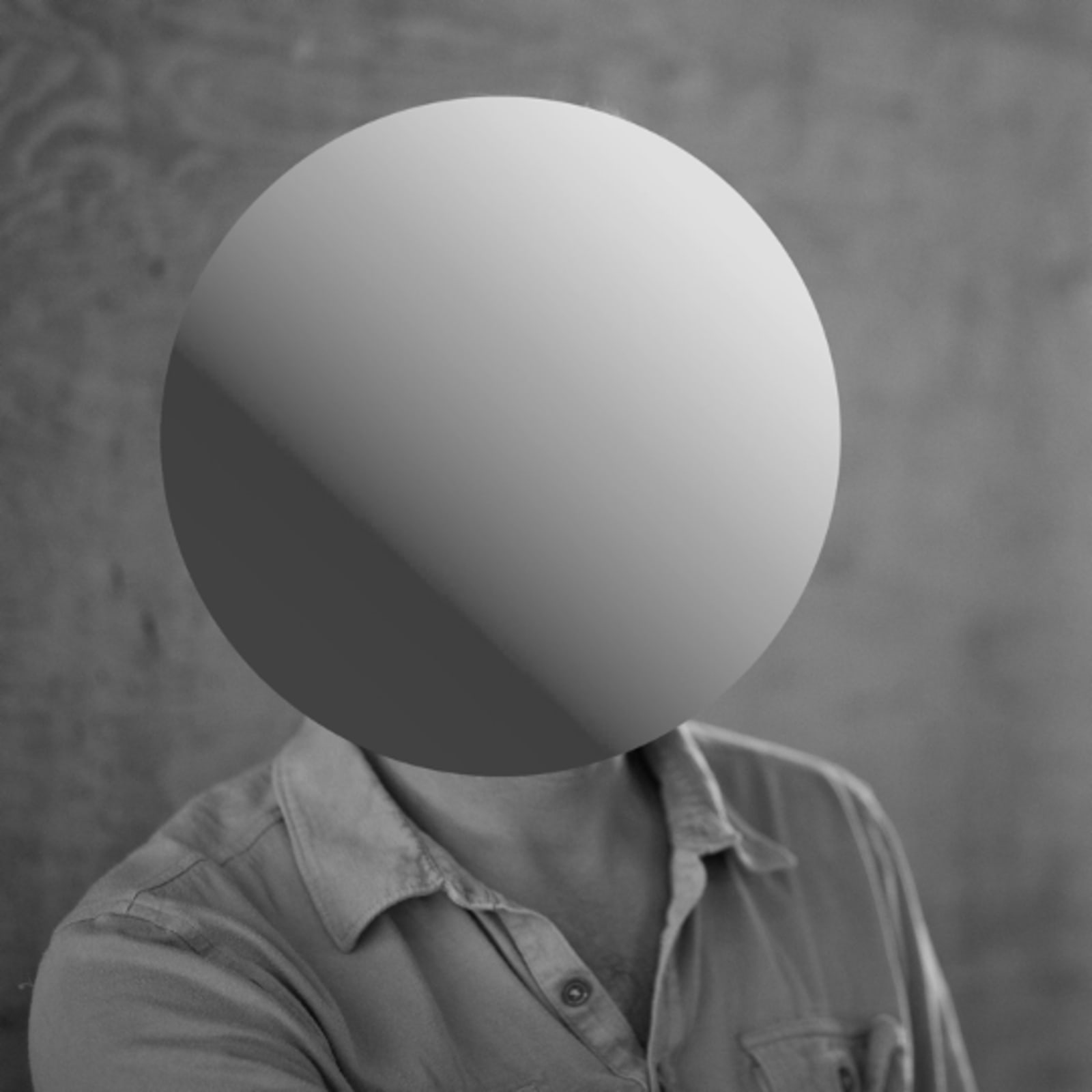
Shohei Fujimoto is a digital artist born in 1989 and based in Tokyo. His first encounter with digital technology dates back to his childhood: when he was 6 years old, he loved to draw on screen with the software contained in a PC that his mother used for recordings. From that moment on, his fascination with the back and forth between analog and digital has continued to grow. Today he creates works of art to which he gives, through the movement he gives them, an apparent "autonomy". This is to bring the viewer to recognize the consciousness of objects and things. He also often incorporates random elements into his works. His approach constantly questions the viewer about the form of life that is digital creation by bringing out its vital energy through movement.
He exhibits around the world and works in collaboration with other renowned artists, not only on generative, but also on constructions and staging that give substance to his inspiration. For example, the latest work and events in 2021: HOKUTO ART PROGRAM ed.1 [30 Oct - 12 Dec], Kiyoharu Art Colony - Museum of the Light, Yamanashi, Japan] ; Abstract Art in the Age of New Media [8 Feb - 9 May] [MoCDA's VIRTUAL GALLERY] ; [LIVE SET] MUTEK.JP Edition 5 - w/Kyoka [11 Dec] [Shibuya Stream Hall, Tokyo, Japan] ; [LIVE SET] PARADISE CITY Apperceptional Glimpse: Traumatised Conventions - w/Kyoka [30 Oct] [PARADISE CITY, Incheon, Korea] ; INSTALLATION] Solo Exhibition - INTANGIBLE FORMS [3 Mar - 13 Mar, 3 Sept - 14 Oct] [ARTECHOUSE - NYC, New York, USA] ; [INSTALLATION] Japan Media Arts Distributed Museum - ETERNAL presented by MUTEK.JP [1 - 7 Feb] [Haneda Airport International Terminal - TIAT SKY HALL, Tokyo, Japan]...
He exhibits around the world and works in collaboration with other renowned artists, not only on generative, but also on constructions and staging that give substance to his inspiration. For example, the latest work and events in 2021: HOKUTO ART PROGRAM ed.1 [30 Oct - 12 Dec], Kiyoharu Art Colony - Museum of the Light, Yamanashi, Japan] ; Abstract Art in the Age of New Media [8 Feb - 9 May] [MoCDA's VIRTUAL GALLERY] ; [LIVE SET] MUTEK.JP Edition 5 - w/Kyoka [11 Dec] [Shibuya Stream Hall, Tokyo, Japan] ; [LIVE SET] PARADISE CITY Apperceptional Glimpse: Traumatised Conventions - w/Kyoka [30 Oct] [PARADISE CITY, Incheon, Korea] ; INSTALLATION] Solo Exhibition - INTANGIBLE FORMS [3 Mar - 13 Mar, 3 Sept - 14 Oct] [ARTECHOUSE - NYC, New York, USA] ; [INSTALLATION] Japan Media Arts Distributed Museum - ETERNAL presented by MUTEK.JP [1 - 7 Feb] [Haneda Airport International Terminal - TIAT SKY HALL, Tokyo, Japan]...

Collision - Vertical
Shohei Fujimoto’s inspiration for this work of art lies in mathematics and more specifically in the intersection. He likes to vibrate the simple mathematical expression of the intersection. here, he endeavours to observe and underline the structure of a sphere by means of lines of reflection.. A new reality emerges in the virtual space and gives a real air to a whole series of data.
technique
generative art
format
portrait
duration
03:00
year
n/a
Transport
More from Shohei Fujimoto
More on digital art
Generative art
Generative art refers to a way of creating artworks using an autonomous system. In digital art, these are usually generated from code and algorithms created by the artist, often with certain predefined parameters or systems. Although these parameters guide the final outcome of the work, generative art is generally a surprising way to create artworks, as the results are often unexpected and the number of possible outcomes can be infinite.
AI
AI art is a branch of generative art that uses artificial intelligence. Unlike other generative artworks, AI artworks use specific complex algorithms and models derived from machine learning. The most common methods for creating AI art today are GANs (generative adversarial networks) or proprietary prompting platforms such as ChatGPT, Sora, Midjourney, or Dall-e.
3D
3D art uses 3D software such as Blender, Cinema4D, Houdini, or video game software such as Unity to create works of art. In 3D works, artists can either arrange assets (the 'objects' in a 3D artwork or world) that they have created themselves or purchased from other creators to create elaborate environments and scenes (an approach to 3D art called 'set dressing'), or specialize in sculpting, which involves creating their own objects and assets.
Photogrammetry
Photogrammetry is a specialized 3D technique that allows 3D objects to be created from numerous photographs taken of an object or scene from multiple angles. These photos are then compiled to determine the specific positioning, shape, and dimensions of the object in space, and then converted into a 3D model. Initially developed for engineering and urban planning, photogrammetry has become a way for artists to produce extremely accurate 3D models from real-life images.
Collage
An extension of the traditional, plastic approach to collage, digital collage involves searching for and cutting out multiple images, extracting them from their original context, and recomposing them in a new arrangement to create a work of art. Artists can use their own photographs or find images on the internet.
Illustration
Digital illustrations are created using software such as Adobe Illustrator, Photoshop, or Procreate. As with drawing on paper, the artist uses a stylus to sketch a figure or object, usually on a tablet, to construct a scene or artistic universe. Unlike traditional drawing methods, digital illustration is much more forgiving, as mistakes can be easily corrected and drawn elements and objects can be easily moved around within a scene.
Video
Video artworks primarily use a recording camera, but may sometimes include additional post-processing or editing to distort, modify or add additional elements to the image. Some artists use state-of-the-art recording equipment to create macro zoom-ins or time lapses, privileging fidelity to the subject matter. Others use additional softwares to significantly modify or warp the video, creating an alternative perspective on the world that surrounds us.
Collections with the artist

Mathematical Art
75 artworks

Abstract
148 artworks

Black & White
119 artworks

Knowledge & Exploration
52 artworks

Infinite Circle
97 artworks